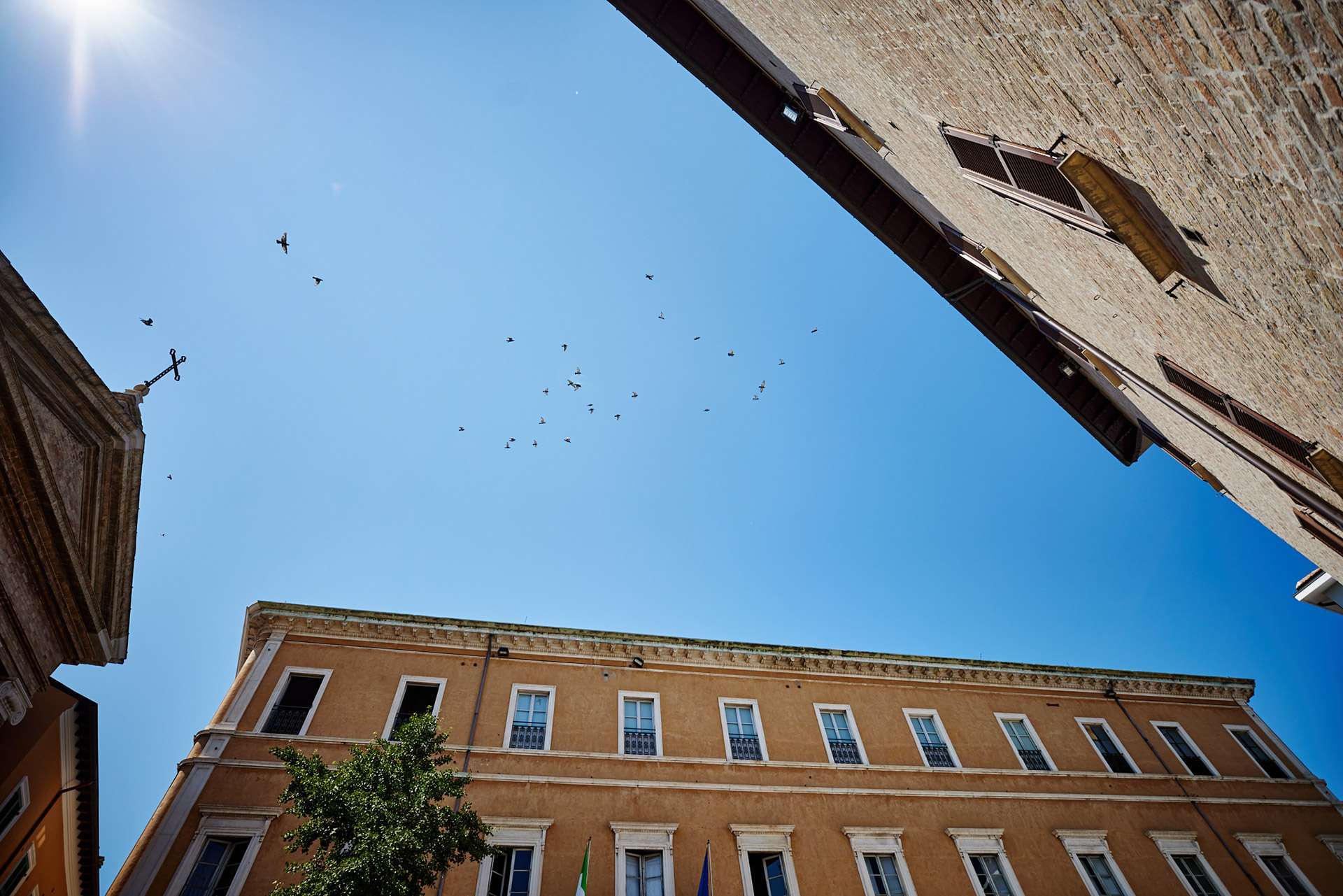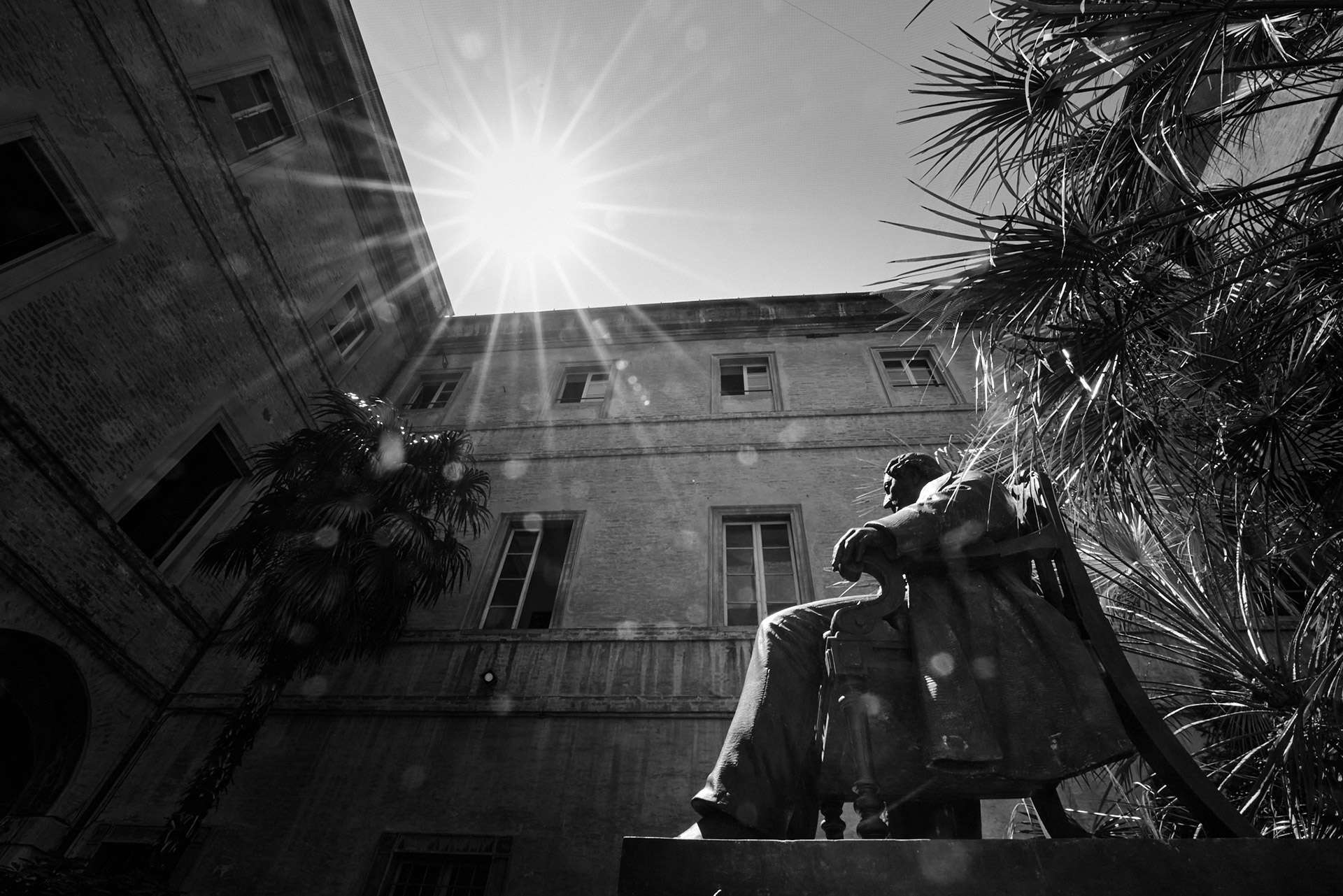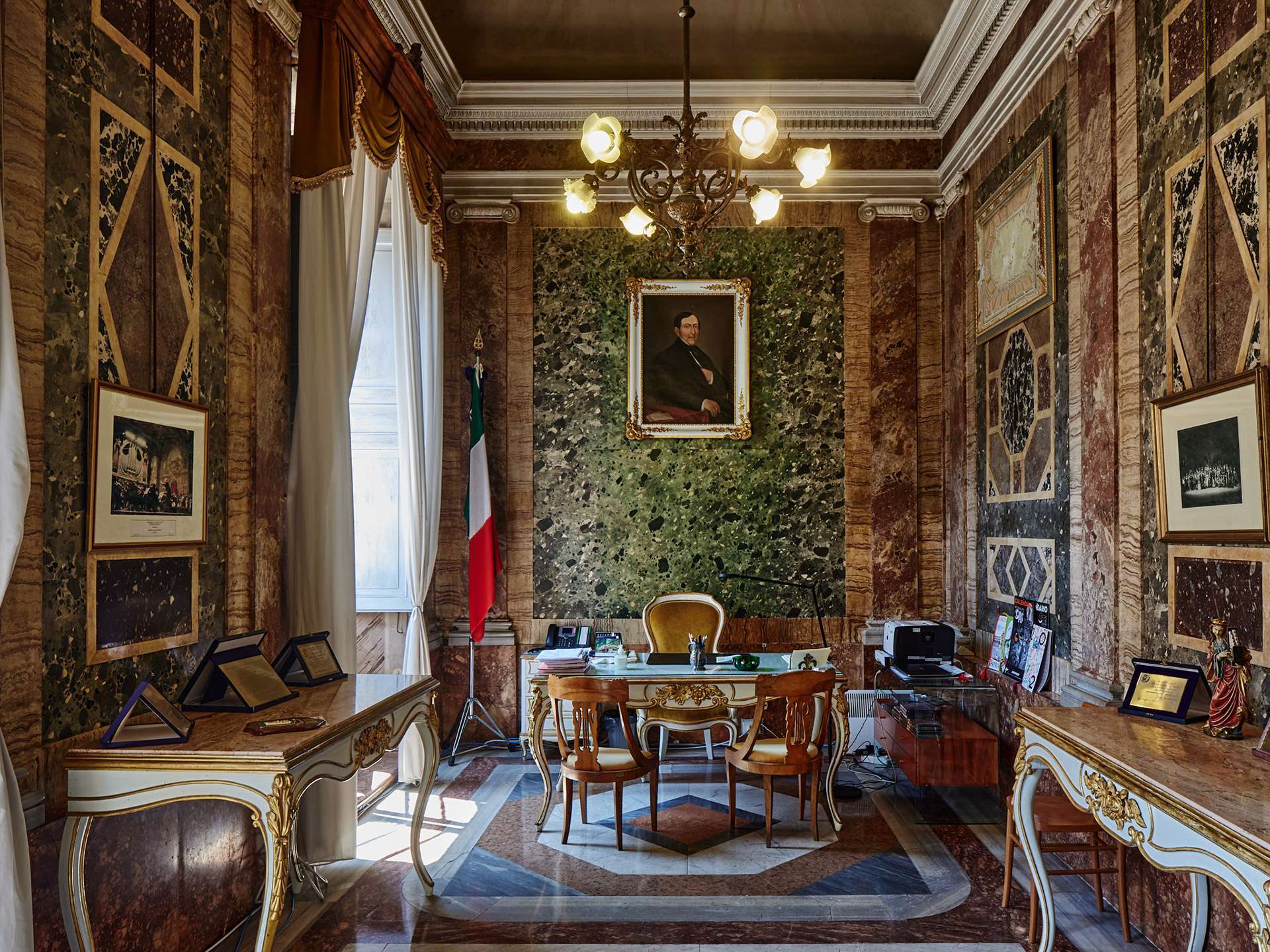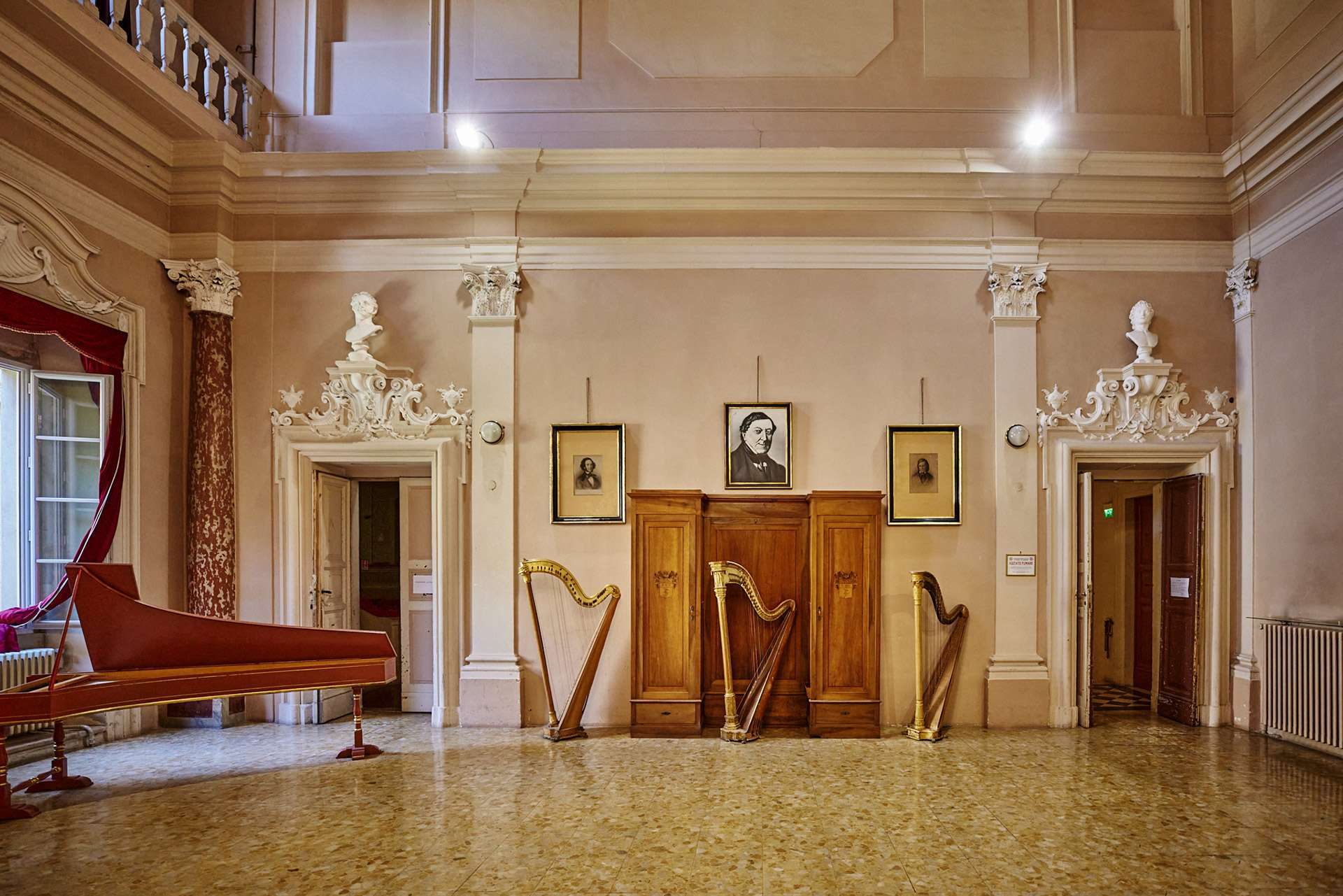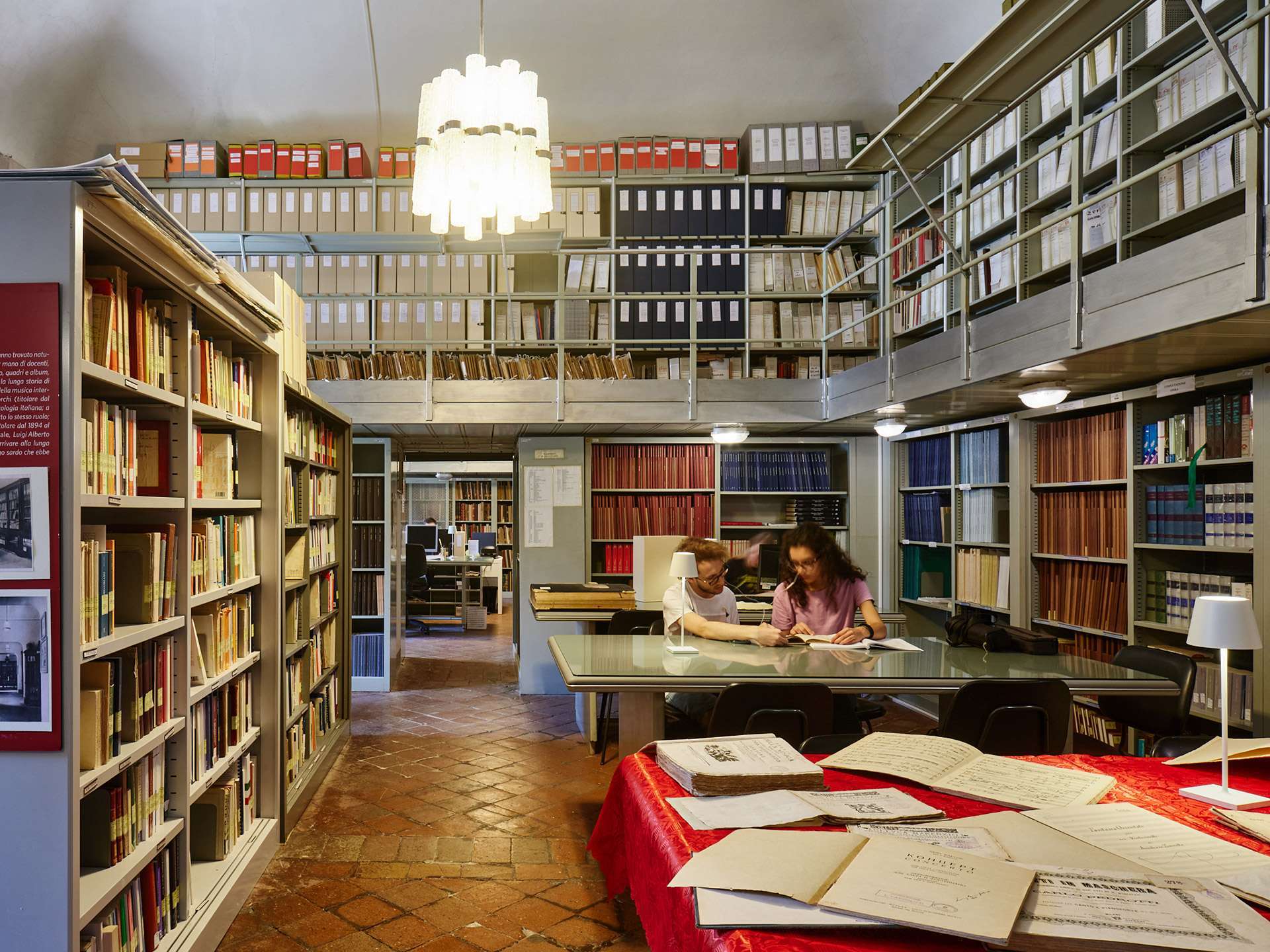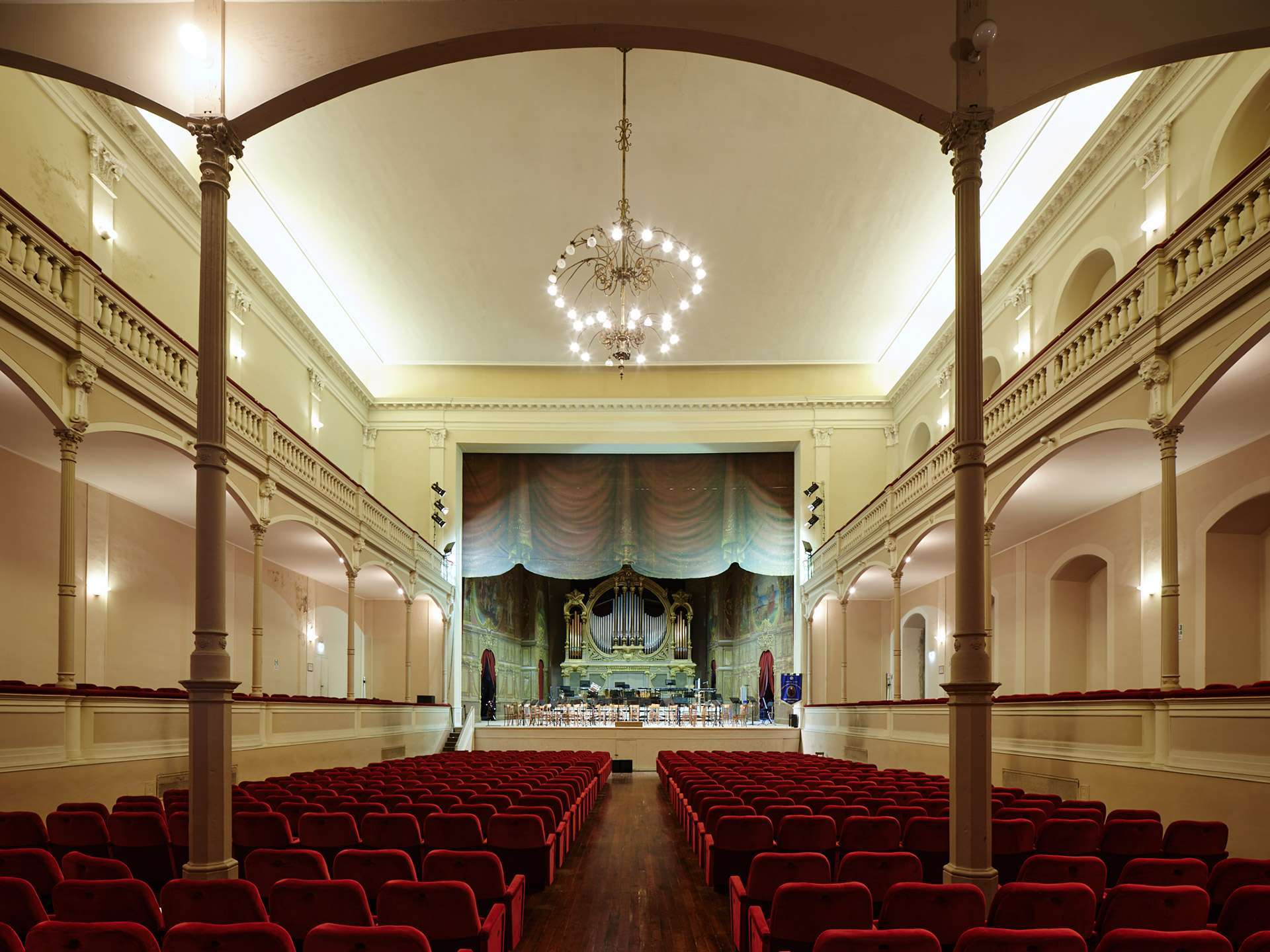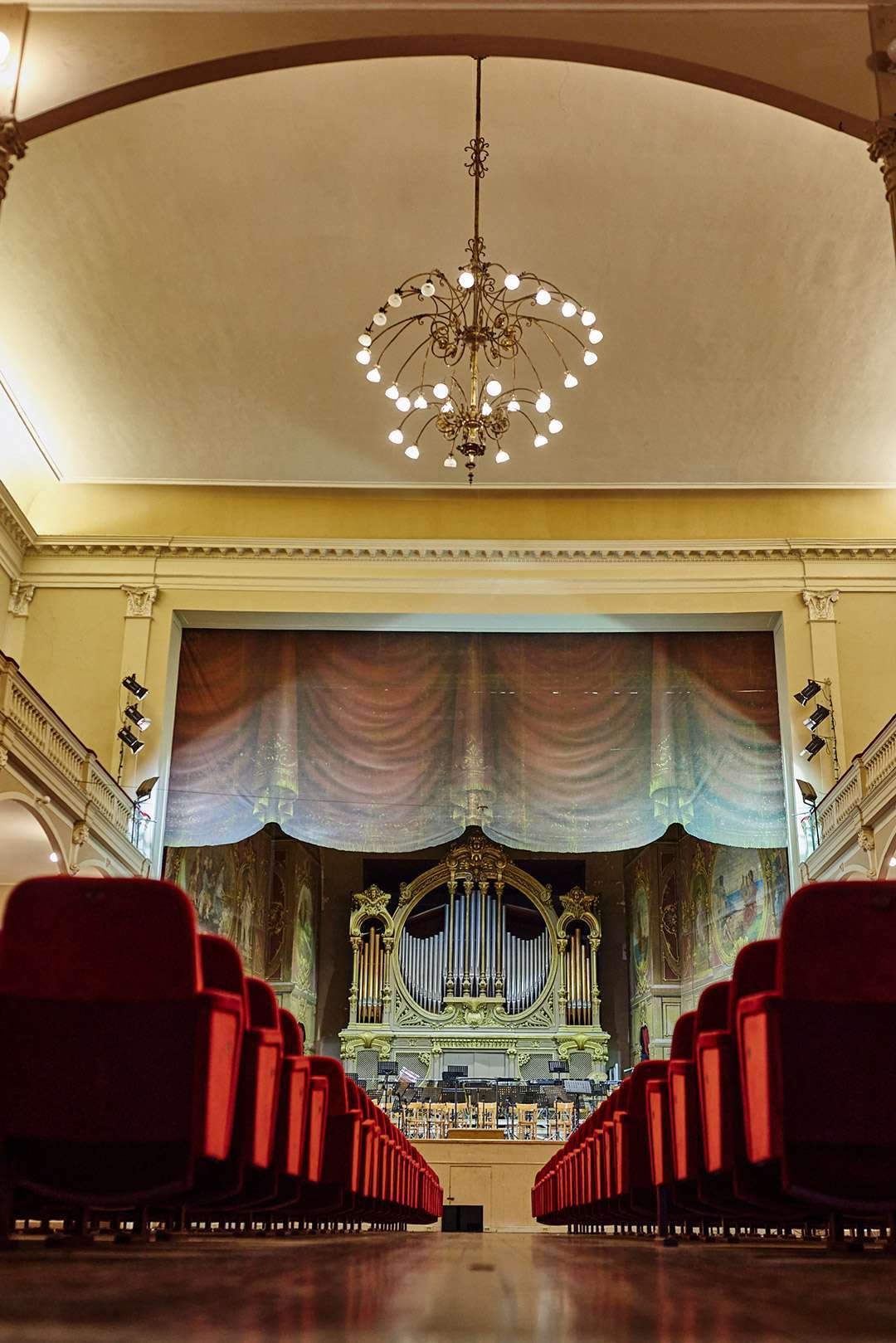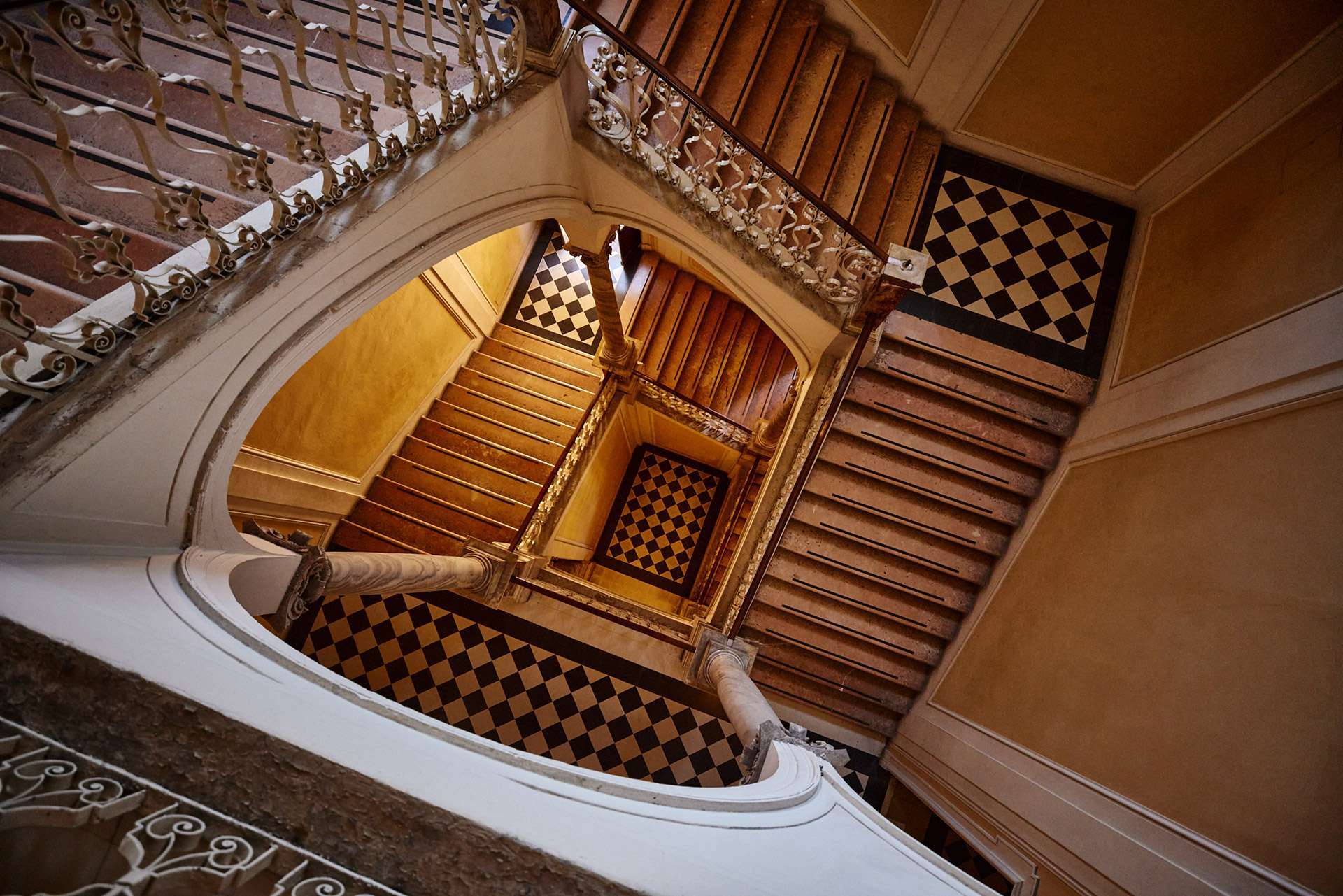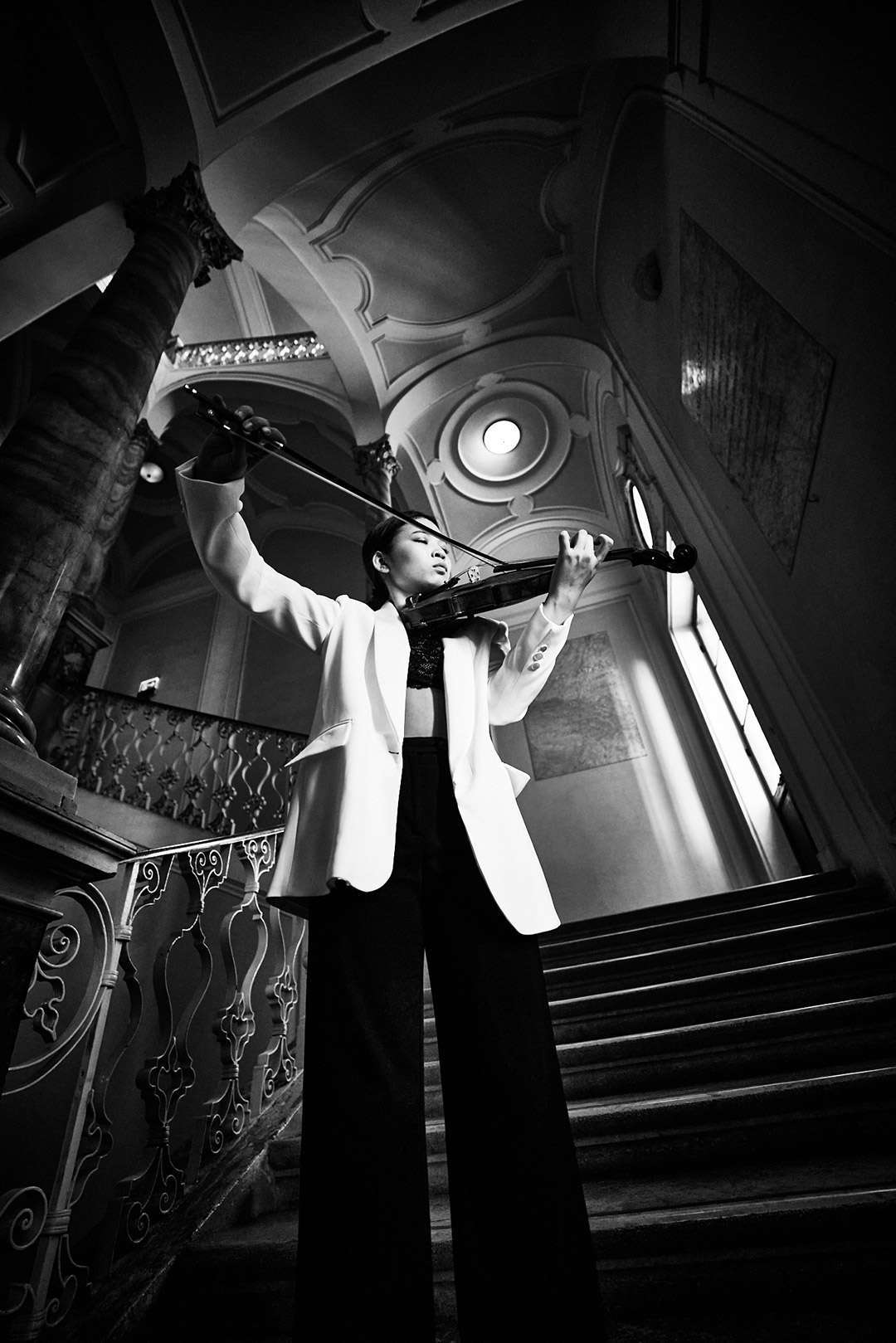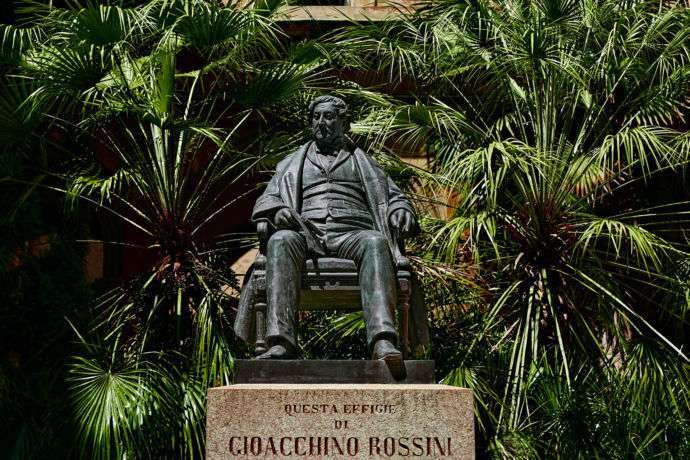
The Rossini Conservatoire is one of the oldest and most prestigious conservatories in Italy, created in accordance with Gioachino Rossini’s specific wishes in his will. In fact, in his will—written on July 5, 1858, ten years before his death—the Pesaro-born musician stated: “…I name the municipality of Pesaro, my homeland, as heir to my estate, to establish and endow a Musical Lyceum in that city…”
The high school began offering music courses in 1882.
From the very beginning, the artistic level of the school was guaranteed by the presence of some of the greatest composers of the time as directors. The first was Carlo Pedrotti, an opera composer from Verona who left his position as director of the Orchestra of the Teatro Regio in Turin to take up the new post and brought top-level teachers to Pesaro. Among other things, it was thanks to his commitment that the Auditorium – now an integral part of the Conservatoire – was built, bearing his name and inaugurated in 1892. Other directors of extraordinary prestige followed, including composers Pietro Mascagni, Amilcare Zanella, and Riccardo Zandonai. Each of them surrounded himself with highly talented musicians, such as violinists Remy Principe and Attilio Crepax (teacher of Gioconda De Vito, who graduated from the Pesaro institution in 1921 at the age of only 14), Giovanni Chiti, and Riccardo Brengola; pianists Adriano Ariani and Sergio Lorenzi; cellists Nerio Brunelli and Lino Filippini; horn player Domenico Ceccarossi; and singers Arturo Melocchi and Carmen Melis. The work of all these great artists has created over time an authentic cultural heritage that has nourished a teaching and artistic tradition for which the Rossini Conservatoire is famous throughout the world.
Soprano Renata Tebaldi, tenor Mario Del Monaco, and composer Riz Ortolani are just some of the most famous alumni of the Rossini Conservatoire, artists whose extraordinary international careers have brought prestige to their alma mater over time.
Currently, the Gioachino Rossini State Conservatoire of Music in Pesaro is a Higher Institute of Music Studies within the Higher Artistic and Musical Education (AFAM) sector of the Ministry of University and Research.
Directors of the Conservatoire
from 1882 to today

Carlo Pedrotti
SOURCES
Annuari scolastici del Liceo Rossini, I-XII (1882-1894).
BIBLIOGRAPHY
Concetta Assenza, Rossini, Pedrotti e Bodojra: nuove ricognizioni sui fondi della Biblioteca del Conservatorio di Pesaro, in Biblioteca di musica. Studi in onore di Agostina Zecca Laterza in occasione dei 25 anni della fondazione della IAML Italia, a cura di M. Camera e P. Florio, Milano, IAML Italia, 2019, pp. 293-310.
Francesco Bissoli, Il contributo di Carlo Pedrotti e del Liceo Rossini di Pesaro alla riforma degli studi musicali, «Studi musicali», XXXVII, 2008, pp. 177-199.
Concetta Assenza
Arturo Vanbianchi
Arturo Vanbianchi (Milan, April 3, 1862 – Milan, December 22, 1942) graduated in composition from the Milan Conservatoire, where he studied from 1876 to 1882 with Ronchetti-Monteviti, Ponchielli, Panzini, and Dominiceti. He taught composition and organ and served as vice director of the Bergamo Music School (1883–1887); after Ponchielli’s death, he became Maestro di cappella of the Basilica of Santa Maria Maggiore.
In February 1890 he joined the Rossini Musical Lyceum, assisting Director Carlo Pedrotti in teaching harmony, counterpoint, fugue, and composition, while also serving as an organ teacher. Among his notable students were Mezio Agostini—whom Vanbianchi guided through advanced studies in composition—and Alessandro Peroni, a distinguished pianist and composition graduate.
He was a close collaborator of Carlo Pedrotti during the Lyceum’s first significant decade, from its foundation (5 November 1882) to the major celebrations marking the centenary of Rossini’s birth. In 1892, he played a leading role in the completion of the new premises at Palazzo Olivieri and in the concerts dedicated to Rossini. For the inauguration of the concert hall on February 29, 1892, he composed a Fantasia for orchestra on Rossini themes, conducted by Pedrotti and performed by an orchestra of 70 musicians, including teachers and students. He subsequently conducted Rossini’s opera L’occasione fa il ladro in the same hall (now the Pedrotti Auditorium) on July 10 and 14, 1892.
After Pedrotti’s death in October 1893, Vanbianchi assumed leadership of the Lyceum, directing it for two years until August 30, 1895. His tenure was marked by a strong commitment to maintaining the institution’s growing national reputation. He paid close attention to teaching quality, ensuring a high standard of exercises and student performances, and emphasized discipline encouraging all students, as Pedrotti had done before him, in the study of cultural subjects alongside technical training.
After leaving Pesaro, Vanbianchi won the Steiner Competition (1896) with his opera La nave. He later served as deputy director of the Parma Conservatoire (1901–1902) before returning to Milan, where he spent the rest of his life as a private teacher.
A composer of operatic, symphonic, chamber, piano, and vocal music, he donated both his own works and those of others to the Library of the Rossini Conservatoire, where manuscripts and early printed editions are still preserved today.
SOURCES
Annuari scolastici del Liceo Rossini, I-XIII (1882-1895).
Concetta Assenza
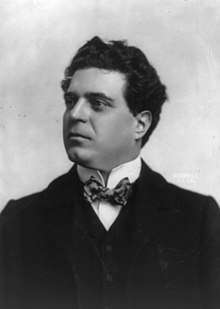
Pietro Mascagni
Pietro Mascagni (Livorno, December 7, 1863 – Rome, August 2, 1945) studied at the Milan Conservatoire with Ponchielli, but interrupted his studies in April 1885. He then worked with Dario Acconci’s operetta company before settling in Cerignola, where he became a teacher at the local Philharmonic Society.
In 1888 he won first prize in the Sonzogno competition with the one-act opera Cavalleria rusticana, based on the novella by Giovanni Verga. The work achieved immediate and extraordinary success at its premiere at the Teatro Costanzi in Rome in 1890, and within a few months it was enthusiastically received in major cities across Europe and America. This marked the explosive beginning of a long operatic career, featuring works that range from verismo to commedia dell’arte, from exoticism to decadence: L’amico Fritz (1891), I Rantzau (1892), Guglielmo Ratcliff (1895), Iris (1898), Isabeau (1911), Parisina (1913), Il piccolo Marat (1921), and Nerone (1935). He also composed the original score for the film Rapsodia satanica by Nino Oxilia (1915) and a “symphonic vision” titled Guardando la Santa Teresa del Bernini.
Alongside his work as a composer, Mascagni quickly developed an international reputation as a conductor. He achieved major successes in Vienna and Paris in 1892, and in London in 1893, where he conducted his operas during the Italian season at Covent Garden.
He was appointed director of the Rossini Musical Lyceum in October 1895, in the city where he had the one-act opera Zanetto performed in 1896. Mascagni’s ambitious plans for his leadership of the Pesaro institute were already evident in a letter to Augusto Guidi-Carnevali, his predecessor and president of the administrative board of the Rossini Musical Lyceum, in which he wrote that he had been thinking extensively about the institution and that “a thousand ideas” had come to his mind—ideas which, if put into practice, would undoubtedly bring great development to the Lyceum. In particular, he stressed the importance of the instrumental classes, expressing his wish for Pesaro to develop a model orchestra, which would be “of incalculable advantage for the School of Composition.” He concluded by stating that he would be proud to hold the position of director of the musical college, which, in his view, “must become the foremost in Italy.”
Under Mascagni’s leadership, the Rossini Lyceum became a leading artistic and musical center, largely thanks to its orchestra, which he conducted on highly successful tours in Italy and abroad. Notable performances include concerts in Recanati in 1898 for the centenary of Leopardi’s birth, the concert for the inauguration of Rossini’s funerary monument at Santa Croce in June 1902, and appearances in Prague, Bucharest, Budapest, Vienna, Warsaw, and Berlin.
In September 1902, he resigned as director of the Lyceum following a dispute with the municipal authorities, who had withdrawn their confidence over alleged shortcomings in the administrative and financial management of the institution.
BIBLIOGRAPHY
Roger Flury, Pietro Mascagni: a Bio-Bibliography, Westport, Greenwood, 2001.
Cesare Orselli, Pietro Mascagni, Roma, NeoClassica, 2019.
Francesco Finocchiaro
Antonio Cicognani
Antonio Cicognani (Faenza, May 18, 1857 – Pesaro, June 13, 1934) received his training at the Bologna Musical Lyceum, studying piano with Giuseppe Liverani and Ernesto Colombani, and composition with Vincenzo Petrali and Alessandro Busi, graduating in composition in 1881. During the same years, he was active as an organist and Kapellmeister at Faenza Cathedral (1879–1894). He later continued his studies at the Kirchenmusikschule in Regensburg, which in 1895 awarded him a diploma in composition with highest honours. His study of Gregorian chant, Palestrinian polyphony, and the principles of the Cecilian reform proved fundamental to his stylistic development, leading him to reject many of his early works and to designate as his opus one the Missa benedicta et venerabilis (1897), an example of a new aesthetic based on modal purity and strict counterpoint.
In 1897 Pietro Mascagni appointed Cicognani as vice director of the Rossini Musical Lyceum in Pesaro, the city where he would spend the rest of his life. He served as acting director from 1902 to 1905, following Mascagni’s dismissal, and subsequently held the chair of fugue and counterpoint as well as the position of vice director until his death on June 13, 1934, after a long illness and in modest financial condition.
The Pesaro period (1897–1934) represents the most accomplished phase of Cicognani’s artistic and pedagogical activity. He reformed the institute’s teaching approach by strengthening instruction in harmony and counterpoint, particularly drawing on the theories of Moritz Hauptmann and Hugo Riemann. Cicognani established a true school of sacred music that would have a lasting influence on future generations of students—including Zandonai, Balilla Pratella, and Ferrari Trecate—while also promoting the dissemination of symphonic music, in continuity with the legacy of Carlo Pedrotti and Mascagni.
Among the most significant works of this period is the Ave Maria for eight voices (1898), dedicated to Giovanni Tebaldini and structured in three parts: an imitative introduction with a modal character is followed by a denser, more dialogic central section, culminating in a concluding passage where the modal framework re-emerges prominently. The double-choir setting allows for antiphonal interplay and echo effects reminiscent of the polychoral tradition, yet with a restrained tone consistent with the teachings of Regensburg. Frequently performed in Pesaro in the early twentieth century, the work became a model of the Cecilian renewal in Italy, combining contrapuntal austerity, formal clarity, and a sober harmonic modernity.
BIBLIOGRAPHY
Cicognani Antonio, in Dizionario Biografico degli Italiani, vol. 25, Roma, Enciclopedia Treccani, 1981, https://www.treccani.it/enciclopedia/antonio-cicognani_(Dizionario-Biografico)/ (ultimo accesso settembre 2025).
Antonio Zecchini, Un poeta dell’arte musicale: Antonio Cicognani, Faenza, Stabilimento grafico Lega, 1934.
Aiya Rakhimova
(student in Historical, Critical and Analytical Studies of Music)
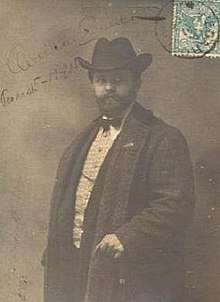
Amilcare Zanella
Castore Amilcare Andrea Zanella (Monticelli d’Ongina, September 26, 1873 – Pesaro, January 9, 1949) began his musical studies at a very young age and was admitted to the Royal School of Music in Parma in 1883, where he graduated in horn, piano, and composition. Gifted with a prodigious memory and a solid pianistic technique, he embarked on an intense concert career that took him to South America between 1893 and 1900, where he established himself as a virtuoso pianist, improviser, and composer.
In 1900 he returned to Italy, continued his successful concert activity, and in 1903 was appointed director of the Parma Conservatory. In 1905 he moved to Pesaro, beginning his long tenure as director of the Rossini Musical Lyceum. With skill and intelligence, he reformed the teaching system, established a permanent orchestra, expanded the institution’s concert production beyond Pesaro, and devised refined musical programmes featuring unusual repertoire, works composed specifically for students or faculty, and transcriptions of instrumental and operatic music by both early and modern composers.
Zanella was also a prolific composer, whose extensive catalogue reflects a cultivated and versatile creative mind. He is particularly associated with his large output of piano, chamber, and symphonic music, including the symphonic poems Fede (1905) and Vita (1907). In 1910 he premiered his opera Aura in Pesaro, while his subsequent opera Æternitas (1915) could not be staged due to Italy’s entry into the First World War. In 1926 he achieved his greatest theatrical success with La Sulamita, which premiered at the Teatro Municipale in Piacenza.
In 1930 Pesaro celebrated his twenty-five years as director with a commemorative volume. The following years saw a rich output of patriotic compositions, as well as the burlesque opera Il revisore (1940), which was also well received in Germany and Belgium.
A fundamental part of his career was devoted to the celebration of great Italian composers, especially Rossini. From its foundation, the Pesaro Lyceum marked its patron’s birth every leap year, and Zanella revitalized this tradition by presenting, alongside established repertoire, lesser-known or previously unpublished works, often transcribed for various chamber or orchestral ensembles. Three commemorations in particular established him as a leading figure in Rossini scholarship and performance: the performances of the Stabat Mater (1912), The Barber of Seville in a revision aimed at restoring the original version (1916), and La Cenerentola (1920). Zanella was also an enthusiastic supporter of Giuseppe Radiciotti’s monumental monograph on Rossini, which the author dedicated entirely to him.
After retiring in 1940, he continued to compose despite financial difficulties and increasing isolation, leaving unpublished works such as the opera Notte d’incanti and the ballet L’isola dei sogni.
BIBLIOGRAPHY
Francesco Bussi, Amilcare Zanella musicista piacentino (1873-1949) emulo di Busoni e paladino di Rossini, vent’anni dopo, in Studi storici in onore di Emilio Nasalli Rocca, Piacenza, Deputazione di Storia Patria per le Province Parmensi, 1971, pp. 83-121.
Andrea Sessa, Il melodramma italiano 1901-1925, Firenze, Leo S. Olschki, 2014, pp. 923-926.
Andrea Parissi
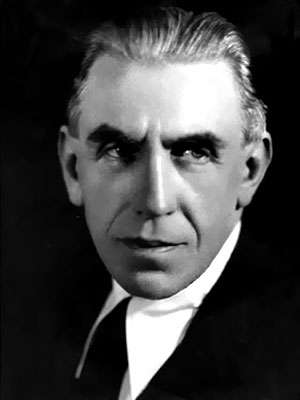
Riccardo Zandonai
Riccardo Zandonai (Sacco, May 28, 1883 – Pesaro, June 5, 1944) was born to a shoemaker and a cigar maker in Sacco, a small village near Rovereto in Trentino, then part of the Austro-Hungarian Empire. Choosing a path that was also a declaration of Italian identity, he pursued his studies in Italy: after initial training in Rovereto with Vincenzo Gianferrari, he continued in Pesaro, where he graduated in composition from the Rossini Musical Lyceum under Pietro Mascagni. He quickly established himself as one of the most original figures of early twentieth-century Italian music, achieving great fame with Francesca da Rimini (1914), based on Gabriele D’Annunzio’s tragedy with a libretto adapted by Tito Ricordi. The opera revealed a distinctive musical language, notable for its rich orchestral colour as a co-protagonist alongside the voices, and for its sensitivity to Symbolist and late-Romantic European influences. Married to the Tuscan singer Tarquinia Tarquini, he was also highly active as a conductor.
After receiving the Premio Mussolini for the arts in 1935, he was appointed director of the Rossini Conservatoire in 1940. Among the most significant initiatives of his tenure was a series of chamber and symphonic concerts, open to the entire public, held in the Salone Pedrotti, featuring performers such as Gaspar Cassadó, Arturo Benedetti Michelangeli, and the Trio di Trieste. Of particular note is the speech delivered at the opening of the series:
“By investigating and attempting to understand the musical taste of the people of Pesaro, I was told—rightly or wrongly—that such taste was lively and interested in singing and opera, but less so in concerts, namely chamber and symphonic music. If this is true, it constitutes a rather serious gap, since centuries of great Italian, German, and French musical tradition remain voiceless. And it is especially serious today, when, after three centuries of the glory of melodrama, this genre—just to be clear—is in a deep crisis, and there are even those who are ringing its death knell. […] On the other hand, even those who are ringing its death knell may be right. […] The people of Pesaro would therefore find themselves in a backward position if they did not develop an interest in concerts. To be a musical city, it is not enough to invoke Rossini’s name every day and claim to live forever on that legacy.”
These were, however, extremely difficult years. Just as his native Trentino had been a frontier during the First World War—when his home was looted by Austrian forces and his piano taken to the trenches due to accusations of treason linked to his irredentist sympathies—Pesaro found itself on the Gothic Line during the Second World War. Zandonai’s villa on Monte San Bartolo was seized by German forces. Displaced to the Convent of Beato Sante in Mombaroccio, where he composed the Trio-Serenata for piano, violin, and cello, he died on June 5, 1944, following complications from surgery. In 1947, his remains were transferred to Rovereto and buried in the cemetery of Borgo Sacco.
A composer deeply rooted both in his native land and in the regions of Pesaro and Carpegna, Zandonai left a body of work that includes, among others, the Concerto romantico for violin, the Concerto andaluso for cello, and Il flauto notturno for flute, as well as symphonic poems such as Primavera in Val di Sole and Rapsodia trentina. His catalogue occupies a significant place in the transition from verismo to modernity in musical theatre, with twelve operas including Conchita, Giulietta e Romeo, and I cavalieri di Ekebù, and more broadly within Italian art music of the first half of the twentieth century.
BIBLIOGRAPHY
Konrad C. Dryden, Riccardo Zandonai. A Biography, con un’introduzione di Renata Scotto e Magda Olivero, Frankfurt am Main, Peter Lang, 1999.
Alberto Nones, Zandonai. Un musicista nel vento del Novecento, con una prefazione di Diego Cescotti e una postfazione di Paolo Peloso, Trento, UCT, 2014.
Alberto Nones
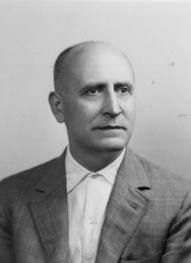
Dante D’Ambrosi
Dante D’Ambrosi (Zagarolo, February 22, 1902 – Pavia, June 8, 1965), after obtaining diplomas in piano and composition from the Royal Conservatoire of Santa Cecilia, pursued further studies in conducting with Bernardino Molinari and in piano with Alfredo Casella. Open to all currents of musical writing, he already demonstrated in his early compositions an assimilation of contemporary eclecticism (Le stelle for soprano and orchestra, 1926; Tema con variazioni for orchestra, 1928).
In 1940 he joined the Royal Rossini Conservatoire in Pesaro, invited by the then director Riccardo Zandonai to teach composition and to serve as vice director. Following Zandonai’s death (June 15, 1944), the advancing front and the evacuation order issued by German forces made it impossible for D’Ambrosi to maintain the institution’s activities. Only after his confirmation as acting director (October 9, 1944), and with the support of the Conservatoire’s president Giuseppe Filippini, was he able to restore the use of some spaces in Palazzo Olivieri, allowing for entrance examinations and the organization of a number of concerts.
In October 1945, with the appointment of Carlo Zecchi as director, D’Ambrosi resumed his role as vice director, later serving again as acting director between March and November 1947. After leaving Pesaro to take up positions as professor of composition and fugue at the Conservatoires of Naples and Rome, he was appointed director of the Rossini Conservatoire on November 7, 1963. In a short time, he succeeded in re-establishing a collaborative environment, which had been weakened under the previous director, Rito Selvaggi.
He promoted numerous initiatives, including commemorative concerts in honour of Mascagni and Zandonai, the establishment of a summer advanced course for opera singers, and the creation of scholarships for outstanding students. He also laid the conceptual foundations for the revival of opera in Pesaro, envisioning both a research centre dedicated to Rossini studies and a festival modeled on Salzburg and Bayreuth—projects he was unable to complete due to his sudden death on June 8, 1965, but which would later find realization in the Rossini Opera Festival.
D’Ambrosi was an eclectic musician: alongside his intense teaching and administrative work, he was active as a musicologist and critic, as well as a conductor of orchestras and polyphonic ensembles, and a composer. His extensive and varied catalogue ranges from opera (Il carillon di Haarlem, 1933; La deposizione, 1952) and symphonic repertoire (Due impressioni della notte di Natale, 1927; Ouverture festiva for orchestra, 1933; Trittico sinfonico, 1942) to a wide body of chamber music, solo instrumental works, and choral compositions.
BIBLIOGRAPHY
Lino Bianchi, Dante D’Ambrosi. Un compositore fra tradizione e modernità, «Nuova rivista musicale italiana», 37, n. 3, 2003, pp. 419-428.
Antonio Brancati, Sul Liceo Musicale Rossini poi Conservatorio e i suoi Direttori, in I centodieci anni del Liceo Musicale Rossini (1892-1992) oggi conservatorio in Pesaro, a c. di Antonio Brancati, Pesaro, Conservatorio di Musica di Pesaro, 1992, pp. 19-81.
Mariateresa Storino

Carlo Zecchi
Carlo Zecchi (Rome, July 8, 1903 – Salzburg, August 31, 1984) received his first piano instruction from his mother. He later studied at the Santa Cecilia Conservatoire in Rome with Francesco Bajardi (piano) and Licinio Refice (composition); in 1923 he moved to Berlin to further his studies with Arthur Schnabel and Ferruccio Busoni. Press reviews from early 1945 portray him as a brilliant concert pianist, praised by critics for his strong lyrical sensibility and rigorous fidelity to the musical text. After achieving success in the USSR, South America, and the United States (between 1928 and 1931), as well as in major European capitals (from 1933), his career was seriously affected by a car accident in 1938. Thereafter, he performed mainly in chamber ensembles, particularly in duo with the cellist Enrico Mainardi.
The abrupt interruption of his pianistic career nevertheless provided him with the opportunity to turn his attention to orchestral conducting, which, after a brief apprenticeship, brought him satisfactions no less significant than those he had achieved as a pianist. From 1947 onwards he conducted the Vienna Chamber Orchestra on several occasions; in 1957 he conducted the Orchestra del Maggio Musicale Fiorentino on a South American tour. In the meantime, he obtained the chair of piano at the Rome Conservatoire, thus beginning a long career as a teacher and editor of piano works for major publishing houses, a career that later led him to hold prestigious appointments at the Accademia Nazionale di Santa Cecilia and the Accademia Musicale Chigiana. The decree appointing Zecchi as Commissioner-Director of the Pesaro Conservatoire was signed on 20 September 1945 by the Minister of Public Education in the second Bonomi government, Vincenzo Arangio-Ruiz, and took effect from the following 1 October.
In his role as “commissioner for the directorship”, Carlo Zecchi was required to confront one of the most difficult periods in the history of what had been, since 1940, the Royal Gioachino Rossini Conservatoire of Music. In addition to the predictable difficulties of a historical moment in which the problems of musical education were far from being a political priority, there were misunderstandings and hostility on the part of local authorities who, nostalgic for the institution’s former autonomy (state control had not been introduced without resentment and controversy), poorly tolerated the top-down appointment of a commissioner and, precisely in the days when Zecchi’s appointment was being finalised in ministerial offices, were actively promoting the candidacy of Vittorio Gui for the position of director.
Despite these challenges, Zecchi quickly worked to present the Conservatoire’s needs to the Ministry. In a report drafted at the beginning of 1946, he requested the reinstatement of courses in ensemble music, supplementary violin, Latin, and French—subjects previously introduced successfully under Zandonai but now deemed “non-essential” by ministerial officials. He also advocated for individual faculty members whose positions were uncertain or disputed. However, widespread dissatisfaction with repeated refusals and with the austerity measures affecting the Conservatoire’s staffing structure soon extended to Zecchi himself, whose efforts were overshadowed, by the spring of 1946, by accusations—often unfounded—of negligence.
In an increasingly hostile environment, far removed from the collaborative atmosphere he had initially described, Zecchi chose to resign from his position on March 15, 1947, returning to his piano professorship in Rome.
BIBLIOGRAPHY
Antonio Brancati, Sul Liceo Musicale Rossini poi Conservatorio e i suoi Direttori, in I centodieci anni del Liceo Musicale Rossini (1892-1992) oggi conservatorio in Pesaro, a c. di Antonio Brancati, Pesaro, Conservatorio di Musica di Pesaro, 1992, pp. 19-81.
Zecchi Carlo, in DEUMM. Dizionario Enciclopedico Universale della Musica e dei Musicisti, a c. di Alberto Basso, Le biografie, vol. VIII, Torino, UTET, 1988, p. 595.
Luigino Pizzaleo
Dante D’Ambrosi
Dante D’Ambrosi (Zagarolo, February 22, 1902 – Pavia, June 8, 1965), after obtaining diplomas in piano and composition from the Royal Conservatoire of Santa Cecilia, pursued further studies in conducting with Bernardino Molinari and in piano with Alfredo Casella. Open to all currents of musical writing, he already demonstrated in his early compositions an assimilation of contemporary eclecticism (Le stelle for soprano and orchestra, 1926; Tema con variazioni for orchestra, 1928).
In 1940 he joined the Royal Rossini Conservatoire in Pesaro, invited by the then director Riccardo Zandonai to teach composition and to serve as vice director. Following Zandonai’s death (June 15, 1944), the advancing front and the evacuation order issued by German forces made it impossible for D’Ambrosi to maintain the institution’s activities. Only after his confirmation as acting director (October 9, 1944), and with the support of the Conservatoire’s president Giuseppe Filippini, was he able to restore the use of some spaces in Palazzo Olivieri, allowing for entrance examinations and the organization of a number of concerts.
In October 1945, with the appointment of Carlo Zecchi as director, D’Ambrosi resumed his role as vice director, later serving again as acting director between March and November 1947. After leaving Pesaro to take up positions as professor of composition and fugue at the Conservatoires of Naples and Rome, he was appointed director of the Rossini Conservatoire on November 7, 1963. In a short time, he succeeded in re-establishing a collaborative environment, which had been weakened under the previous director, Rito Selvaggi.
He promoted numerous initiatives, including commemorative concerts in honour of Mascagni and Zandonai, the establishment of a summer advanced course for opera singers, and the creation of scholarships for outstanding students. He also laid the conceptual foundations for the revival of opera in Pesaro, envisioning both a research centre dedicated to Rossini studies and a festival modeled on Salzburg and Bayreuth—projects he was unable to complete due to his sudden death on June 8, 1965, but which would later find realization in the Rossini Opera Festival.
D’Ambrosi was an eclectic musician: alongside his intense teaching and administrative work, he was active as a musicologist and critic, as well as a conductor of orchestras and polyphonic ensembles, and a composer. His extensive and varied catalogue ranges from opera (Il carillon di Haarlem, 1933; La deposizione, 1952) and symphonic repertoire (Due impressioni della notte di Natale, 1927; Ouverture festiva for orchestra, 1933; Trittico sinfonico, 1942) to a wide body of chamber music, solo instrumental works, and choral compositions.
BIBLIOGRAPHY
Lino Bianchi, Dante D’Ambrosi. Un compositore fra tradizione e modernità, «Nuova rivista musicale italiana», 37, n. 3, 2003, pp. 419-428.
Antonio Brancati, Sul Liceo Musicale Rossini poi Conservatorio e i suoi Direttori, in I centodieci anni del Liceo Musicale Rossini (1892-1992) oggi conservatorio in Pesaro, a c. di Antonio Brancati, Pesaro, Conservatorio di Musica di Pesaro, 1992, pp. 19-81.
Mariateresa Storino

Franco Alfano
Franco Alfano (Naples, March 8, 1876 – Sanremo, October 27, 1954) is remembered as one of the leading Italian composers of the first half of the twentieth century.
In Naples he studied piano with Alessandro Longo, harmony with Camillo De Nardis, and counterpoint with Paolo Serrao. He later moved to Leipzig, where he studied composition with Salomon Jadassohn and violin with Hans Sitt. He worked as a concert pianist in Germany, Poland, and Russia before relocating to Paris in 1899, where he began composing Risurrezione, his most famous opera. First performed in 1904 and aligned with the Italian verismo tradition, it was met with great acclaim and went on to receive more than a thousand performances.
In the following years, Alfano refined his musical language, and in 1920 he completed La leggenda di Sakùntala, which also enjoyed considerable success. The work stands out for its vocal refinement and the rich timbral and harmonic qualities of its orchestration, leading many critics to regard it as his finest achievement. In 1925 Arturo Toscanini entrusted him with the task of completing Giacomo Puccini’s Turandot, left unfinished at the composer’s death—an episode that still attracts interest today, though with controversial results (Alfano’s “first ending” was rejected by both Toscanini and the publisher Ricordi).
From 1940 to 1942 Alfano served as superintendent of the Teatro Massimo in Palermo, and from 1947 to 1950 he was director of the Pesaro Conservatoire, following similar appointments at the Bologna Conservatory (1916–1923) and the Turin Musical Lyceum (1923–1939).
His final opera, Il Dottor Antonio, dates from his time in Pesaro. With a libretto by Mario Ghisalberti based on the 1849 novel by Giovanni Ruffini, it premiered in Rome on April 30, 1949, at the Teatro Reale dell’Opera, starring soprano Onelia Fineschi and tenor Giacinto Prandelli. The work was later revived and recorded in a 1953 RAI Milan production with the same tenor and soprano Carla Gavazzi. Although still rooted in a Puccinian idiom and largely detached from postwar avant-garde developments, the opera demonstrates notable compositional quality.
Beyond his operatic output, Alfano’s catalogue includes ballets, symphonic works, chamber music, and Lieder repertoire.
BIBLIOGRAPHY
Franco Alfano, Il Dottor Antonio, Orchestra e Coro della RAI di Milano, direttore Alfredo Simonetto, 1953, https://www.youtube.com/watch?v=pfz05q45gKs&t=3s (ultimo accesso luglio 2025).
Guido Maria Gatti, Some Italian Composers of To-Day. II. Franco Alfano, «The Musical Times», 62, n. 937, 1921, pp. 158-161.
Alberto Pironti, Alfano Franco, in Dizionario biografico degli italiani, vol. 2, Roma, Treccani, 1960, www.treccani.it/enciclopedia/franco-alfano_(Dizionario-Biografico)/ (ultimo accesso luglio 2025).
Alessandro Capicchioni
(student in Historical, Critical and Analytical Studies of Music)
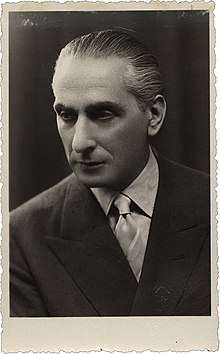
Antonio Veretti
Antonio Veretti (Verona, February 20, 1900 – Florence, July 13, 1978) was a prolific composer, pianist, and music critic. He studied piano and harmony in Verona and composition in Bologna, where he graduated in 1921. A student of Franco Alfano, Veretti initially followed his teacher’s path but gradually distanced himself after graduation to embrace the style of Ildebrando Pizzetti and Italian neoclassicism. His early vocal and piano compositions attracted the attention of critic Giannotto Bastianelli, who encouraged him to pursue opera.
Veretti’s first opera, Il medico volante, with a libretto by Riccardo Bacchelli, dates from 1923–24. His first symphonic work, Sinfonia italiana, was composed in 1929 after he moved to Milan in 1926. In 1932, thanks to the intervention of Umberto Giordano, his opera Il favorito del re, with a libretto by Arturo Rossato, was performed at La Scala. During these years, Veretti moved away from neoclassicism, developing a modern eclectic style that combined jazz, blues, and traditional melodies.
Economic stability from his teaching position in Rome (1933–1943) allowed him to focus on ballets, operas, and film music. After a brief return to sacred music, in the immediate postwar period he resumed writing symphonic and chamber works, adopting twelve-tone techniques while avoiding the integral serialism prevalent in Europe.
Veretti served as director of the Pesaro Conservatoire from 1950, of Cagliari from 1953, and finally of Florence from 1956. The Sonata for Violin and Piano (1952), composed during his Pesaro years, was dedicated to an “imaginary daughter” (Veretti married Ines Verdi in 1930 but had no children). The Sonata explores the possibilities of the traditional chamber duo through twelve-tone techniques, displaying rich timbral variety and giving each instrument intense, independent expression.
A defining feature of Veretti’s output is the balance between expressive content and compositional technique. Critics recognize his significant role in the transition of Italian music from neoclassicism to twelve-tone composition. His archive is preserved at the Scuola di Musica di Fiesole, which he helped to found.
BIBLIOGRAPHY
Nicola Costarella, Antonio Veretti: Sonata per violino e pianoforte, «Rivista musicale italiana», 56, 1954, p. 99.
Marco Targa, Veretti, Antonio, in Dizionario biografico degli italiani, vol. 98, Roma, Treccani, 2020, https://www.treccani.it/enciclopedia/antonio-veretti_(Dizionario-Biografico)/?search=VERETTI%2C%20Antonio%2F (ultimo accesso maggio 2025).
Alessandro Capicchioni
(studente in Discipline storiche critiche e analitiche della musica
Amedeo Cerasa
Amedeo Cerasa (Tuscania, October 23, 1898 – ?) completed his studies in flute and composition under Amilcare Zanella at the Rossini Musical Lyceum, also earning his teaching qualification in choral singing. From 1936, he taught theory and solfeggio at the same institute, having previously held the same position at the Istituto Musicale Verdi in Viterbo.
His transfer from Viterbo to Pesaro was supported by Rossini Musical Lyceum director Amilcare Zanella, who described Cerasa in a letter to Commendatore Annibale Orani, the royal commissioner of the Lyceum, as “a serious and excellent individual in every respect” and “a true and modern specialist in the subject [referring to theory and solfeggio].”
Cerasa served multiple times as vice-director of the Rossini Conservatoire, taking on the role of acting director during transitional periods: from October 16, 1952, to March 15, 1953 (transitioning from Antonio Veretti to Lino Liviabella), and from June 9 to September 30, 1965 (transitioning from Dante D’Ambrosi to Guido Turchi).
His work as both teacher and vice-director was highly regarded. In a confidential letter dated March 2, 1966, Guido Turchi recommended Cerasa to the Ministry for the post of second-class central inspector for artistic education, writing: “Maestro Cerasa possesses excellent teaching qualities, outstanding technical preparation beyond the scope of his subject, and has consistently demonstrated a scrupulous dedication to the Institute, not only in his teaching duties but also in his functions as vice-director, carried out almost continuously for many years, and still ongoing to my full satisfaction. He has shown all the qualities suitable for fulfilling such functions. Moreover, in social relations, Maestro Cerasa conducts himself with impeccable courtesy and flawless correctness in every respect, as I have observed in his performance as vice-director.”
Retired on October 1, 1969, upon reaching the age limit, Cerasa reportedly maintained a deep nostalgia for the “unforgettable School” to which he had dedicated over thirty years of his life.
SOURCES
Documenti amministrativi dell’archivio del Conservatorio di Musica Rossini di Pesaro, classe I, categoria 10, fascicolo 3.
Mariateresa Storino
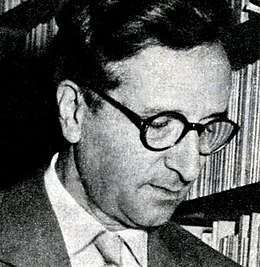
Lino Liviabella
Lino Liviabella (Macerata, April 7, 1902 – Bologna, October 21, 1964), composer and pedagogue, was born into a family of musicians. After completing his secondary education, he moved to Rome to study at the Santa Cecilia Conservatoire, earning diplomas in piano (1923, with Lodovico Cozi), organ (1926, with Remigio Renzi), and composition (1927, with Ottorino Respighi).
He began his teaching career with piano and harmony at the Pescara Musical Lyceum (1928), followed by harmony and counterpoint in Venice (1931). Later, he held the chair of counterpoint, fugue, and composition in Palermo (1940) and Bologna (from 1942), where he also served as vice-director (from 1947) and established his residence. He subsequently became director of the conservatoires of Pesaro (1953–59), Parma (1959–63), and Bologna (1963–64).
A prolific composer, Liviabella authored over 270 works, many recognized with awards or selected for performance in prestigious venues. His output reflects constant exploration of technical novelty and variety, despite a reputation for conservatism and distance from avant-garde trends. His catalogue includes chamber songs, sacred music, symphonic works, operas (including Antigone, La conchiglia, Canto di Natale), cantatas, and numerous piano and chamber pieces. Among the most significant works from his Pesaro years are Rapsodia picena (1955), based on Marche folk songs, Concerto for Violin and Orchestra (1956), Le sette parole di Gesù sulla croce (1957), and the four-movement Symphony for Soprano or Tenor and Orchestra (1964), with texts by T.S. Eliot, notable for its personal use of dodecaphony, a technique Liviabella approached with persistent caution.
At Pesaro, Liviabella promoted celebrations honoring Zandonai and Mascagni; contributed to the founding of the Quaderni rossiniani and the Bollettino del Centro Rossiniano di Studi; and, as director, oversaw the artistic direction of the Società dei Concerti, created in collaboration with local institutions. His administration stood out for the quality of programming and the calibre of performers, although financial results were less robust due to delayed or reduced state subsidies. Nevertheless, he continuously advocated for the continuation of these initiatives, recognizing their importance for the musical education of Conservatoire students.
BIBLIOGRAPHY
L’artista, la lampada e l’ombra, Atti del convegno musicologico nazionale “Lino Liviabella e il suo tempo” (Macerata, 26-27 ottobre 2002), a cura di Paolo Peretti e Carlo Lo Presti, Macerata, Comune di Macerata, 2007.
Paolo Peretti, Liviabella Lino, in Dizionario Biografico degli Italiani, vol. 65, Roma, Enciclopedia Treccani, 2005, https://www.treccani.it/enciclopedia/lino-liviabella_(Dizionario-Biografico)/?search=LIVIABELLA, Lino/ (ultimo accesso settembre 2025).
Aiya Rakhimova
(student in Historical, Critical and Analytical Studies of Music)
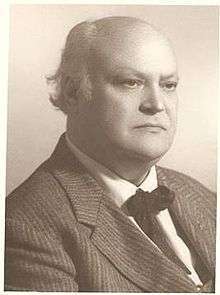
Rito Selvaggi
Rito Selvaggi (Noicottaro, May 22, 1898 – Rapallo, May 19, 1972). In 1910 he moved to Pesaro to study composition at the Musical Lyceum under Amilcare Zanella. He refined his piano skills with Ferruccio Busoni, who encouraged him to continue his studies in Paris, where Selvaggi earned recognition as a pianist.
During the First World War, Selvaggi served in the Italian army; after being wounded, he organized and performed in military concerts. After the war, in 1918, he relocated to Rovereto, where he began establishing himself as a conductor and composer, further developing his career during an extensive international tour from 1923 to 1927. Upon returning to Italy, in 1929 he was appointed artistic director of the EIAR, a position he held until 1943.
Selvaggi’s teaching career began in 1930, when he became director of the Istituto Musicale Pergolesi in Varese and of the Scuola Italiana di Musica in Lugano. In 1934 he took up the chair of composition at the Conservatoire of Parma. From 1938 to 1943 he served as director of the Conservatoire of Palermo, also acting as president until 1941, where he founded the 18th-century orchestra “Alessandro Scarlatti.”
Given his interests not only in contemporary music, but also in the history of music more generally, in 1943 he moved to Rome to take up a ministerial appointment at the Bibliographic Superintendency; he subsequently devoted himself to the study of manuscript music collections preserved in various Roman libraries. In 1956 he returned to the position of Conservatoire director, this time in Parma, where he had taught several years earlier.
Selvaggi concluded his pedagogical career in Pesaro, serving as director of the Rossini Conservatoire from 1959 to 1963, with a brief interruption in 1959–1960 when he was temporarily recalled to Rome. At Pesaro, as he had done in Palermo, he founded an orchestra dedicated to Gioachino Rossini, composed of former students and faculty, and actively engaged in the administrative and organizational life of the conservatory. He retired due to age and moved to his villa in Zoagli, where he died in 1972.
As a composer, Selvaggi worked in multiple genres, with particular emphasis on sacred music. His catalogue includes masses, motets, oratorios, and mystical dramas, notably the Dittico cateriniano (dedicated to Pope Paul VI), composed of La sposa di Fontebranda and Eletta. He also contributed to chamber music and theatre, with notable works such as the Quartetto per archi op. 43 and the lyric tragedy Maggiolata veneziana. Additionally, Selvaggi produced numerous transcriptions and adaptations of works by composers of the past, including Jean-Philippe Rameau, Johann Sebastian Bach, Domenico Scarlatti, and Muzio Clementi.
BIBLIOGRAPHY
Antonio Brancati, Sul Liceo Musicale Rossini poi Conservatorio e i suoi Direttori, in I centodieci anni del Liceo Musicale Rossini (1892-1992) oggi conservatorio in Pesaro, a c. di Antonio Brancati, Pesaro, Conservatorio di Musica di Pesaro, 1992, pp. 19-81.
Emilio Capannelli, Marta Fabbrini, Laura Morotti, Selvaggi, Rito, in SIUSA (Sistema Informativo Unificato per le Soprintendenze Archivistiche), https://siusa-archivi.cultura.gov.it/cgi-bin/pagina.pl?TipoPag=prodpersona&Chiave=59379 (ultimo accesso 24 gennaio 2026).
Cecilia Nicolò
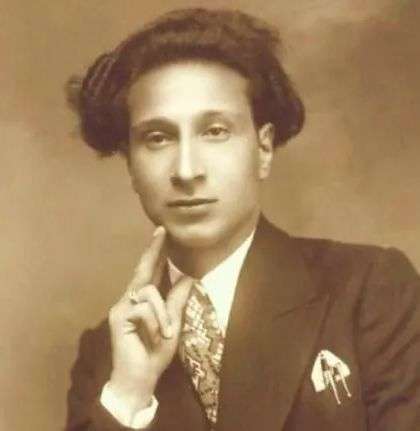
Piero Giorgi
Carlo Piero Giorgi (Montecassiano, March 3, 1897 – Pesaro, August 3, 1967). After serving in the First World War, he enrolled at the Pesaro Musical Lyceum, where he earned his diploma in composition in 1923 under the guidance of Amilcare Zanella. From 1924 to 1937 he directed the music school and the associated town band in his native Montecassiano, leaving the post only when he permanently moved to Pesaro.
At the Musical Lyceum in Pesaro, Giorgi began teaching general musical culture (later called complementary harmony) in the 1935–36 academic year. From 1940–41 he held the chair of harmony, counterpoint, and fugue; between 1945 and 1948 he taught Instrumentation and Composition for Wind Band, and from 1951 he also taught composition, counting among his students the composer Riz Ortolani.
On 16 October 1940, following Zanella’s retirement, he was appointed acting director of the school until the official installation of Riccardo Zandonai on 31 January 1941. Giorgi thus oversaw a delicate phase in the life of the Musical Lyceum, which during that very period became the Royal Conservatoire of Music. He held the same position as acting director for a second time between 16 August and 19 October 1959, that is, between the suspension of his predecessor, Rito Selvaggi, and the appointment of Orazio Fiume; for both directors Giorgi served as deputy director. During the final two years of his service, between 1960 and 1962, he taught harmony, counterpoint, and fugue at the Conservatoire Santa Cecilia.
Actively engaged in both local and national musical life, Giorgi served as interprovincial and later regional secretary of the musicians’ union. In Pesaro, he founded the A.gi.mus (Association of Young Musicians) and the Società dei Concerti. He collaborated with the Rossini Foundation, editing a collection of Italian melodies for voice and piano, short sacred pieces, the cantata Giovanna d’Arco, and the Inno a Napoleone III, all published in the Quaderni rossiniani.
As a composer, Giorgi wrote in diverse genres, including orchestral works such as the symphonic poems In Val d’Astico and Cipressi a San Leopardo, operas including La tota di Frà (first performed at the Teatro Donizetti in Bergamo in 1954), chamber music, choral works like Cantico di Frate Sole, a substantial body of sacred music—especially for organ—and several film scores, from La sposa dei re (1938) to L’inganno della sposa (1951).
BIBLIOGRAPHY
Carlo Piero Giorgi (1897-1967), compositore marchigiano del Novecento, a cura di Paola Ciarlantini, Paolo Peretti e Piero Giorgi jr., Ancona, Consiglio regionale delle Marche, 2021.
Cecilia Nicolò
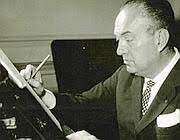
Orazio Fiume
Orazio Fiume (Monopoli, January 16, 1908 – Trieste, December 21, 1976) trained at the San Pietro a Majella Conservatoire in Naples, where he obtained his piano teaching diploma in 1930 and began studying composition. He later moved to the Bellini Conservatoire in Palermo in order to continue his studies with his teacher Mario Pilati, completing his training there in 1938. Between 1939 and 1941 he lived in Rome, attending two advanced courses at the Accademia Nazionale di Santa Cecilia, where he studied composition with Ildebrando Pizzetti and orchestral conducting with Bernardino Molinari.
In 1949 he spent a period in Paris thanks to a scholarship awarded by the Italian Ministry of Education, although from 1941 he had already held the chair of Harmony and Counterpoint at the Arrigo Boito Conservatoire. In 1951 he moved to the Milan Conservatoire, where he taught the same subjects while also taking responsibility for composition classes. In 1959 he obtained the chair of Counterpoint, Fugue and Composition at the same institution.
On 19 October 1959 he was appointed director of the Rossini Conservatoire. During his time there he worked actively to strengthen the institution’s activities and collaborated closely with the city’s cultural bodies and associations, including the municipality, the Rossini Foundation and the Concert Society. He also served on juries and committees for opera competitions held in the Marche region, including those in Fano and Macerata. In 1960 he won the competition for a permanent directorship and took up the post at the Giuseppe Tartini Conservatoire, where he remained until his death. There he continued the administrative and organisational work already begun in Pesaro. Particularly significant was his involvement in the management of the “Città di Trieste” Composition Prize, for which he invited internationally renowned musicians such as Francis Poulenc, Nino Rota and Nadia Boulanger to serve on the jury.
Alongside his extensive teaching activity, Fiume was also a prolific and accomplished composer. Among his earliest works, written during his years in Palermo, are Tre pezzi per piccola orchestra (1936) and Divertimento in cinque tempi (1937). In 1940 he composed the cantata Ajace on a text by Vincenzo Cardarelli. In 1957 he won the Premio Martucci with his Sinfonia in tre tempi. Among his theatrical works, particular attention should be given to the opera Il tamburo di panno, on a libretto written by Fiume himself in collaboration with Carlo Pinelli. First performed at the Teatro dell’Opera di Roma on 19 April 1962, it was inspired by Japanese nō theatre and tells a story blending madness and revenge. Also noteworthy is the ballet In una notte di bufera, based on a text by Rainer Maria Rilke translated by Vincenzo Errante, first staged at the same theatre in June 1973.
BIBLIOGRAPHY
Simona Camilletti, Orazio Fiume, in Dizionario Biografico degli Italiani, vol. XLVIII, Roma, Treccani, 1997, https://www.treccani.it/enciclopedia/orazio-fiume_(Dizionario-Biografico)/ (ultimo accesso gennaio 2026).
Cecilia Nicolò
Rito Selvaggi
Rito Selvaggi (Noicottaro, May 22, 1898 – Rapallo, May 19, 1972). In 1910 he moved to Pesaro to study composition at the Musical Lyceum under Amilcare Zanella. He refined his piano skills with Ferruccio Busoni, who encouraged him to continue his studies in Paris, where Selvaggi earned recognition as a pianist.
During the First World War, Selvaggi served in the Italian army; after being wounded, he organized and performed in military concerts. After the war, in 1918, he relocated to Rovereto, where he began establishing himself as a conductor and composer, further developing his career during an extensive international tour from 1923 to 1927. Upon returning to Italy, in 1929 he was appointed artistic director of the EIAR, a position he held until 1943.
Selvaggi’s teaching career began in 1930, when he became director of the Istituto Musicale Pergolesi in Varese and of the Scuola Italiana di Musica in Lugano. In 1934 he took up the chair of composition at the Conservatoire of Parma. From 1938 to 1943 he served as director of the Conservatoire of Palermo, also acting as president until 1941, where he founded the 18th-century orchestra “Alessandro Scarlatti.”
Given his interests not only in contemporary music, but also in the history of music more generally, in 1943 he moved to Rome to take up a ministerial appointment at the Bibliographic Superintendency; he subsequently devoted himself to the study of manuscript music collections preserved in various Roman libraries. In 1956 he returned to the position of Conservatoire director, this time in Parma, where he had taught several years earlier.
Selvaggi concluded his pedagogical career in Pesaro, serving as director of the Rossini Conservatoire from 1959 to 1963, with a brief interruption in 1959–1960 when he was temporarily recalled to Rome. At Pesaro, as he had done in Palermo, he founded an orchestra dedicated to Gioachino Rossini, composed of former students and faculty, and actively engaged in the administrative and organizational life of the conservatory. He retired due to age and moved to his villa in Zoagli, where he died in 1972.
As a composer, Selvaggi worked in multiple genres, with particular emphasis on sacred music. His catalogue includes masses, motets, oratorios, and mystical dramas, notably the Dittico cateriniano (dedicated to Pope Paul VI), composed of La sposa di Fontebranda and Eletta. He also contributed to chamber music and theatre, with notable works such as the Quartetto per archi op. 43 and the lyric tragedy Maggiolata veneziana. Additionally, Selvaggi produced numerous transcriptions and adaptations of works by composers of the past, including Jean-Philippe Rameau, Johann Sebastian Bach, Domenico Scarlatti, and Muzio Clementi.
BIBLIOGRAPHY
Antonio Brancati, Sul Liceo Musicale Rossini poi Conservatorio e i suoi Direttori, in I centodieci anni del Liceo Musicale Rossini (1892-1992) oggi conservatorio in Pesaro, a c. di Antonio Brancati, Pesaro, Conservatorio di Musica di Pesaro, 1992, pp. 19-81.
Emilio Capannelli, Marta Fabbrini, Laura Morotti, Selvaggi, Rito, in SIUSA (Sistema Informativo Unificato per le Soprintendenze Archivistiche), https://siusa-archivi.cultura.gov.it/cgi-bin/pagina.pl?TipoPag=prodpersona&Chiave=59379 (ultimo accesso 24 gennaio 2026).
Cecilia Nicolò
Dante D’Ambrosi
Dante D’Ambrosi (Zagarolo, February 22, 1902 – Pavia, June 8, 1965), after obtaining diplomas in piano and composition from the Royal Conservatoire of Santa Cecilia, pursued further studies in conducting with Bernardino Molinari and in piano with Alfredo Casella. Open to all currents of musical writing, he already demonstrated in his early compositions an assimilation of contemporary eclecticism (Le stelle for soprano and orchestra, 1926; Tema con variazioni for orchestra, 1928).
In 1940 he joined the Royal Rossini Conservatoire in Pesaro, invited by the then director Riccardo Zandonai to teach composition and to serve as vice director. Following Zandonai’s death (June 15, 1944), the advancing front and the evacuation order issued by German forces made it impossible for D’Ambrosi to maintain the institution’s activities. Only after his confirmation as acting director (October 9, 1944), and with the support of the Conservatoire’s president Giuseppe Filippini, was he able to restore the use of some spaces in Palazzo Olivieri, allowing for entrance examinations and the organization of a number of concerts.
In October 1945, with the appointment of Carlo Zecchi as director, D’Ambrosi resumed his role as vice director, later serving again as acting director between March and November 1947. After leaving Pesaro to take up positions as professor of composition and fugue at the Conservatoires of Naples and Rome, he was appointed director of the Rossini Conservatoire on November 7, 1963. In a short time, he succeeded in re-establishing a collaborative environment, which had been weakened under the previous director, Rito Selvaggi.
He promoted numerous initiatives, including commemorative concerts in honour of Mascagni and Zandonai, the establishment of a summer advanced course for opera singers, and the creation of scholarships for outstanding students. He also laid the conceptual foundations for the revival of opera in Pesaro, envisioning both a research centre dedicated to Rossini studies and a festival modeled on Salzburg and Bayreuth—projects he was unable to complete due to his sudden death on June 8, 1965, but which would later find realization in the Rossini Opera Festival.
D’Ambrosi was an eclectic musician: alongside his intense teaching and administrative work, he was active as a musicologist and critic, as well as a conductor of orchestras and polyphonic ensembles, and a composer. His extensive and varied catalogue ranges from opera (Il carillon di Haarlem, 1933; La deposizione, 1952) and symphonic repertoire (Due impressioni della notte di Natale, 1927; Ouverture festiva for orchestra, 1933; Trittico sinfonico, 1942) to a wide body of chamber music, solo instrumental works, and choral compositions.
BIBLIOGRAPHY
Lino Bianchi, Dante D’Ambrosi. Un compositore fra tradizione e modernità, «Nuova rivista musicale italiana», 37, n. 3, 2003, pp. 419-428.
Antonio Brancati, Sul Liceo Musicale Rossini poi Conservatorio e i suoi Direttori, in I centodieci anni del Liceo Musicale Rossini (1892-1992) oggi conservatorio in Pesaro, a c. di Antonio Brancati, Pesaro, Conservatorio di Musica di Pesaro, 1992, pp. 19-81.
Mariateresa Storino
Amedeo Cerasa
Amedeo Cerasa (Tuscania, October 23, 1898 – ?) completed his studies in flute and composition under Amilcare Zanella at the Rossini Musical Lyceum, also earning his teaching qualification in choral singing. From 1936, he taught theory and solfeggio at the same institute, having previously held the same position at the Istituto Musicale Verdi in Viterbo.
His transfer from Viterbo to Pesaro was supported by Liceo Rossini director Amilcare Zanella, who described Cerasa in a letter to Commendatore Annibale Orani, the royal commissioner of the Liceo, as “a serious and excellent individual in every respect” and “a true and modern specialist in the subject [referring to theory and solfeggio].”
Cerasa served multiple times as vice-director of the Rossini Conservatoire, taking on the role of acting director during transitional periods: from October 16, 1952, to March 15, 1953 (transitioning from Antonio Veretti to Lino Liviabella), and from June 9 to September 30, 1965 (transitioning from Dante D’Ambrosi to Guido Turchi).
His work as both teacher and vice-director was highly regarded. In a confidential letter dated March 2, 1966, Guido Turchi recommended Cerasa to the Ministry for the post of second-class central inspector for artistic education, writing: “Maestro Cerasa possesses excellent teaching qualities, outstanding technical preparation beyond the scope of his subject, and has consistently demonstrated a scrupulous dedication to the Institute, not only in his teaching duties but also in his functions as vice-director, carried out almost continuously for many years, and still ongoing to my full satisfaction. He has shown all the qualities suitable for fulfilling such functions. Moreover, in social relations, Maestro Cerasa conducts himself with impeccable courtesy and flawless correctness in every respect, as I have observed in his performance as vice-director.”
Retired on October 1, 1969, upon reaching the age limit, Cerasa reportedly maintained a deep nostalgia for the “unforgettable School” to which he had dedicated over thirty years of his life.
SOURCES
Documenti amministrativi dell’archivio del Conservatorio di Musica Rossini di Pesaro, classe I, categoria 10, fascicolo 3.
Mariateresa Storino

Guido Turchi
Guido Turchi (Rome, November 10, 1916 – Venice, September 15, 2010). He studied piano and composition at the Santa Cecilia Conservatoire in Rome, completing advanced studies with Ildebrando Pizzetti. Turchi was a founding member of Musica viva, an association dedicated to promoting contemporary music.
After teaching harmony at the Roman conservatory, in 1961 he became professor of counterpoint, fugue, and composition at the Rossini Conservatoire, where in 1965 he was appointed director. During his tenure, he worked with Antonio Garbelotto to enhance the historical documents of the Conservatoire’s music library and established a special course in musicology. He later directed the Parma Conservatoire (1967–1970) and the Firenze Conservatoire (1970–1972).
Turchi held numerous positions in Italian musical institutions, serving as musical consultant for RAI’s Terzo programma and co-director of the “Teatro musicale” section of the Enciclopedia dello spettacolo. He directed the Accademia Filarmonica Romana (1963–1966), Teatro Comunale di Bologna (1968–1970), Accademia di Santa Cecilia (1972–1976), Accademia Musicale Chigiana in Siena (1978–1987), Teatro Angelicum in Milan (1988–1990), and the Orchestra di Padova e del Veneto (1992–1993).
As a composer, his early works of the 1940s show proximity to the twelve-tone method, exemplified by Due poesie di Quasimodo for voice and piano. Subsequent compositions, such as Invettiva for small choir and two pianos, Concerto breve (1947) for string quartet, and Piccolo concerto notturno (1950), reflect an eclectic style combining post-tonalism and neoclassicism, influenced by Petrassi, Casella, Bartók, and Hindemith. His stage works include the radio drama La sera del grande silenzio (1949), Cinque commenti alle Baccanti by Euripide (1952) for the Teatro Greco of Syracuse, and the opera Le avventure del buon soldato Švejk (1962), based on the novel by Jaroslav Hašek, premiered at Teatro alla Scala. He also composed for film, including La steppa (1962, Alberto Lattuada) and Il mistero di Oberwald (1980, Michelangelo Antonioni), and the ballet Dedalo (1972) for the Maggio Musicale Fiorentino.
Turchi contributed to music criticism for the Roman edition of Corriere della Sera, writing essays on Petrassi, Hindemith, Schubert, and Brahms. He authored the entries “Armonia” in the Enciclopedia dello spettacolo and “Fuga” in the Dizionario della Musica e dei Musicisti, and prepared modern editions of works by Andrea and Giovanni Gabrieli, Charpentier, Monteverdi, and Piccinni.
BIBLIOGRAPHY
Fedele D’Amico, Guido Turchi, «Tempo», XXI, 1951, pp. 26-31.
Cesare Orselli, I Wanderjahre di Guido Turchi, «Chigiana», IX-X, 1972-73, pp. 141-145.
Francesco Finocchiaro

Marcello Abbado
Marcello Abbado (Milan, October 7, 1926 – Stresa, June 4, 2020), son of Michelangelo (first violin at La Scala) and brother of Claudio (conductor), was first of all a brilliant pianist. A student of G. Gavazzeni and G.F. Ghedini at the Verdi Conservatoire in Milan, he graduated in piano in 1944 and in composition in 1947. The piano opened the doors to some of the most important theatres and concert halls in the world, as a soloist and alongside conductors such as Guido Cantelli and Wolfgang Sawallisch; in 1962 he performed Paul Hindemith’s Kammermusik No. 2 under the direction of the composer. His concerts were often monographic (Mozart, Bach, Scarlatti) and his complete performance of the piano works of Claude Debussy remains memorable. He served on juries of some of the most important international competitions, such as the “Busoni” in Bolzano and the “Tchaikovsky” in Moscow. From 1991 he directed the prestigious Scuola di perfezionamento musicale in Imola. The catalogue of his compositions includes about seventy works, from Lento e rondò for violin and piano (1950) to Fibonacci for piano (2013), although most of the titles belong to the last twenty years of his life. From 1950 Abbado taught piano at the Conservatoires of Cagliari, Venice, Milan, and Parma, then harmony, counterpoint, fugue, and composition in Bologna. He assumed the role in 1958 with the directorship of the Istituto musicale pareggiato of Piacenza. His directorial assignment at the Rossini Conservatoire began on October 1, 1966.
Under Abbado’s direction, the Conservatoire saw a considerable increase in enrollments; there was also an increase in the number and quality of final recitals, which often took the form of thematic and monographic concerts and constituted a full concert season. No less commitment was required from the teachers: between 1970 and 1972 the complete performances of Beethoven’s Sonatas and the piano works of Schumann took place under the care of the piano teachers. Abbado was particularly attentive to relations with other institutions (local and national) and understood the importance of media communication, as demonstrated by the relations he maintained with RAI officials to promote recordings of student concerts. The Conservatoire then assumed, together with the Rossini Foundation, an active role in the celebrations of the Rossini centenary held between February 29 and November 13, 1968. On February 4, 1973, Abbado resigned to assume the direction of the Milan Conservatory.
Alongside a markedly competitive approach, summarized in the formula “the best teachers to train the best students,” Abbado combined a recognized sensitivity to the dissemination of musical culture and the related updating of teaching. During his mandate (concurrent with a widespread movement around the renewal of musical teaching), he worked to establish the extraordinary course in music teaching, participated and in some cases took part personally in organizing conferences and round tables, revealing an idea of musical education that was not limited to mere technical training but also looked at the overall formation of the student.
Abbado realized early that even a conservatory so tied to tradition as the “Rossini” should not lose contact with the most advanced areas of musical production: in 1971 the Electronic Laboratory for Experimental Music (LEMS) was inaugurated, still located on the top floor of Palazzo Olivieri, and from 1971, among the first in Italy, the electronic music course began in Pesaro.
BIBLIOGRAPHY
Abbado. Famiglia di musicisti italiani, in DEUMM. Dizionario Enciclopedico Universale della Musica e dei Musicisti, a c. di Alberto Basso, Le biografie, vol. I, Torino, UTET, 1985, p. 3.
Antonio Brancati, Sul Liceo Musicale Rossini poi Conservatorio e i suoi Direttori, in I centodieci anni del Liceo Musicale Rossini (1892-1992) oggi conservatorio in Pesaro, a c. di Antonio Brancati, Pesaro, Conservatorio di Musica di Pesaro, 1992, pp. 19-81.
Luigino Pizzaleo
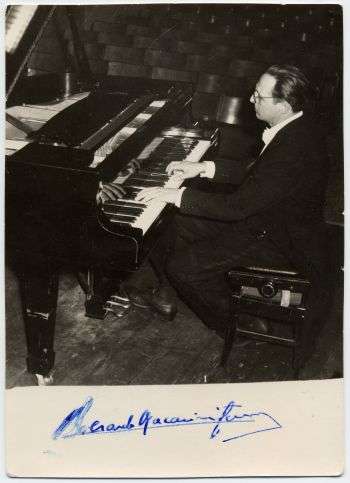
Gherardo Macarini Carmignani
Gherardo Macarini Carmignani (Montecarlo di Lucca, February 5, 1916 – there, ? 2004), son of Mario and Enrica Tonelli, was a pianist and teacher. A student of Alfredo Casella at the Accademia Chigiana courses, he pursued an intense concert career until the 1970s, with particular attention to composers of the first half of the twentieth century. In 1958 he made the first live recording of Goffredo Petrassi’s Piano Concerto with the RAI Symphony Orchestra of Turin. In the meantime, he performed in a duo with the violinist Edmondo Malanotte and, together with the violinist Ida Coppola, who became his wife, he was first a member of the Quartetto Romano and later of the Quartetto Pro Arte of Bologna.
Alongside his concert activity, Macarini Carmignani taught piano at the conservatoires of Bologna, Pesaro, and finally Rome. During his time in Pesaro, he studied Rossini’s piano works, of which he revised some pages and wrote a short article published in La Rassegna Musicale.
At the end of the 1960s he focused exclusively on educational management, beginning with the Conservatoire of L’Aquila, which, from a branch of Santa Cecilia in Rome, became an autonomous institution thanks to Macarini Carmignani’s commitment. In 1973 he was called to direct the Rossini Conservatoire in Pesaro, a position he held until his retirement in 1981. In the meantime, he worked on establishing the Fermo branch.
During his Pesaro directorship (1973–81), he maintained an extensive correspondence with several figures in the Italian musical world, including Giorgio Cambissa and other fellow directors, discussing updates to curricula and the regulations of musical studies. He dedicated himself to expanding the Conservatoire’s educational facilities and consolidated the experimental courses in new composition education and electronic music, enhancing the LEMS with new new approach to composition teaching. Attentive to the public role of the Conservatoire as a primary cultural institution serving the city, he drew up an extremely modern “Regulations for the Use of the Laboratory”: the facility was made available not only to internal students but also to external musicians and scholars.
To improve the Conservatoire’s educational offerings, Macarini Carmignani invited prominent national figures such as Fausto Razzi, a leading figure of Goffredo Petrassi’s school, and other representatives of the contemporary Roman music scene. He worked to support young students through scholarships and promoted the institution’s visibility at the national and international level. Within this framework, between 1975 and 1977, he organized an international conference on contemporary music and published the TecnoMusica dossier (1977–78), the first and only editorial attempt documenting the research and experimentation activities of the LEMS.
BIBLIOGRAPHY
Gherardo Macarini Carmignani, La musica per pianoforte di Rossini negli autografi pesaresi, «La rassegna musicale», XXIV, n. 3, 1954, pp. 229-241.
Prima scelta di pezzi per pianoforte, prefazione di Alfredo Bonaccorsi, revisione di Gherardo Macarini Carmignani, Firenze, L. S. Olschki, 1954.
Domenico Tampieri, Circostanze e motivazioni nei primi Laboratori elettronici: il Conservatorio G. Rossini di Pesaro, «Quaderni Musicali Marchigiani», vol. 7-8, 2000-2001, pp. 7-80.
Riccardo Graciotti
Nicola Jannucci
Nicola Jannucci (Città Sant’Angelo, June 16, 1942 – Città Sant’Angelo, July 5, 2021) studied at the Conservatorio Santa Cecilia in Rome in the piano class of Vera Gobbi Belcredi and later became a pupil of Friedrich Würer. As a soloist and in chamber music ensembles, he developed an intense performance career in Italy and abroad, distinguishing himself as a collaborative pianist and a refined interpreter of Italian, French, Russian vocal chamber repertoire, and German Lieder.
From the academic year 1966–67 he taught piano at the Braga Musical Institute in Teramo. In 1969 he was called to Pesaro, where from 1 October 1971 he held the chair of piano, a position he retained until 1 November 2009. At the Rossini Conservatoire in Pesaro, from 1974 to 1981 he also served as Deputy Director; in 1981, for a brief period, he was Acting Director. After his time in Pesaro, he directed the Conservatories of Matera, Campobasso, Mantua, and Pescara.
BIBLIOGRAPHY
Antonio Brancati, Sul Liceo Musicale Rossini poi Conservatorio e i suoi Direttori, in I centodieci anni del Liceo Musicale Rossini (1892-1992) oggi conservatorio in Pesaro, a c. di Antonio Brancati, Pesaro, Conservatorio di Musica di Pesaro, 1992, pp. 19-81.
Riccardo Graciotti
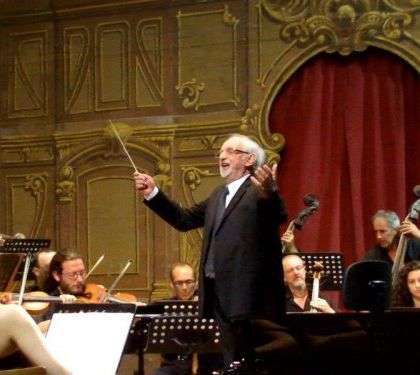
Michele Marvulli
Michele Marvulli (Altamura, July 20, 1929), pianist and conductor, began his musical studies at the Piccinni Music High School in Bari. A student in the piano class of Nicola Costa and the composition class of Nino Rota, of whom he later became a close collaborator and frequent interpreter, he furthered his studies first at the Accademia di Santa Cecilia and then at the Hochschule für Musik in Basel. These were years of intense concert activity, both as a soloist and in duo with the violinist Ludmilla Kusnetoff. From the early 1960s he began teaching at the conservatories of Florence and Bari, establishing a solid piano school. Marvulli discovered relatively late what is today considered his primary vocation, conducting. In 1971–72 he successfully attended Franco Ferrara’s courses at the Accademia Chigiana in Siena: this marked the beginning of a career that led him to collaborate with soloists such as Aldo Ciccolini and undertake demanding performances as both pianist and conductor. Guest of various orchestras (Prague Chamber Orchestra, International Festival Orchestra of Pula – with which he conducted Turandot –, Reykjavik International Festival Orchestra), he conducted a wide symphonic and operatic repertoire. For seven years he was artistic director of the Metropolitan Orchestra of Bari, and later became permanent director of the Philharmonic Orchestra of the Marche. Alongside his artistic activity, Marvulli devoted himself to teaching, holding courses and masterclasses at prestigious institutions in Germany, France, the United States, and Australia.
In 1977 Marvulli became director of the Conservatoire of Cosenza. In 1981 he took the same role in Pesaro; among his first initiatives as director was the strengthening of chamber music courses and choral training. Marvulli’s mandate, marked by strong openness to the external world, coincided with important anniversaries: in 1983, one hundred years after a similar initiative at the former Musical Lyceum, a concert took place in the Pedrotti Auditorium (notable for audience turnout and performance quality), involving the Conservatoire’s student and teacher choir and orchestra. On May 31, at the recently reopened Teatro Rossini, the centenary of Riccardo Zandonai was celebrated, with Marvulli conducting Francesca da Rimini; this event remained memorable for the city, not only for its international resonance (Francesca featured Rajna Kabaivanska), but also for the nostalgia evoked by the cherished memory of the Trentino Maestro (first director of the Royal Conservatoire from 1940 to 1944) among the Pesaro audience. At the same theatre and on the same date, four years later, an acclaimed performance of Signor Bruschino was staged by students and singers of the Conservatoire. Last but not least, the Rossini bicentenary in 1992, for the XIII edition of the Rossini Opera Festival, saw the Pedrotti host a prestigious edition of Il viaggio a Reims, conducted by Claudio Abbado, staged by Luca Ronconi, with sets by Gae Aulenti. Collaboration with the Ente Concerti and the Pesaro Musical Operations Group materialized in a series of concerts and seminars dedicated to contemporary music, involving figures such as Franco Donatoni, Salvatore Sciarrino, and Francesco Pennisi. At the turn of the decade, the regular conducting course, an experimental music theory school, and – long-awaited at the only Conservatoire in the Marche – a special accordion course were established.
BIBLIOGRAPHY
Antonio Brancati, Sul Liceo Musicale Rossini poi Conservatorio e i suoi Direttori, in I centodieci anni del Liceo Musicale Rossini (1892-1992) oggi conservatorio in Pesaro, a c. di Antonio Brancati, Pesaro, Conservatorio di Musica di Pesaro, 1992, pp. 19-81.
https://www.michelemarvulli.com/
Luigino Pizzaleo
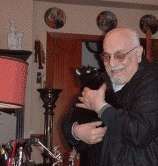
Mario Perrucci
Mario Perrucci (Naples, February 21, 1934 – Pesaro, July 14, 2016), after completing studies in composition, organ, choral music, and choir conducting at the San Pietro a Majella Conservatoire in Naples, pursued a career as a music, film, and theatre critic for various newspapers and specialized periodicals, while also dedicating himself to composition.
He composed original music for dramatic theatre, television, and radio, collaborating with prestigious directors and renowned companies. Among this work, the radio drama La storia di ognuno, broadcast by various radio stations including Radio Vaticana (August 26, 1962), stands out. His compositions, part of a large and varied catalogue, range from symphonic works to educational pieces, including the zarzuela Il gatto astuto and the farce Gagliuso for actors, choir, and soloists. During his long career, he published several monographs on music, such as Individuazione musicale nel contesto dello spettacolo drammatico (1973), derived from his course at the Istituto dello Spettacolo of the University of Urbino, and Egidio R. Duni e Gio Maria Trabaci nella storia della musica (1965), for the Istituto di Organologia e Musicologia of Naples. Alongside his work as an essayist for Cappelli Editore and the journal Musica Oggi, he engaged in transcription work, focusing on 16th–17th-century music, publishing Giovanni Gabrieli’s Sacrae Symphoniae and Luca Marenzio’s Primo libro dei madrigali a 4 voci.
He notably collaborated as a musician with the famous “Compagnia dei quattro,” the historic group composed of Franco Enriquez, Valeria Moriconi, Mario Scaccia, and Glauco Mauri.
He held positions of responsibility in public and private institutions: director of the Centro Universitario Musicale in Naples, honorary inspector of the Ministry of Public Education for monumental and artistic heritage, artistic director of the “Concerti del mercoledì” season in Matera, president of the Gruppo Operativo Musicale of Pesaro, and co-founder and deputy artistic director of the Fondazione Ente Teatro Cronaca under Mico Galdieri from Pesaro.
He held the chair of choral music and choir conducting and later of composition at the Rossini Conservatoire in Pesaro, serving as director from 1994 to 1997.
In 2021, in homage to Perrucci as a composer, the Ducal Academy of Pietragalla established the Composition Competition “Mario Perrucci”.
BIBLIOGRAPHY
Perrucci Mario, in DEUMM. Dizionario Enciclopedico Universale della Musica e dei Musicisti, a c. di Alberto Basso, Le biografie, vol. V, Torino, UTET, 1988, pp. 652-653.
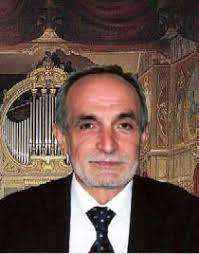
Marco Giannotti
Born in Pesaro, he earned his piano diploma under the guidance of Franco Scala at the Rossini Conservatoire in the same city.
He gave numerous concerts, receiving acclaim from both audiences and critics, and also served as president of the jury in many national and international competitions.
He taught piano at the Fermo Musical Lyceum and later became professor of theory, solfeggio, and musical dictation at the Rossini Conservatoire, where he was appointed vice director. Subsequently, he took on the role of coordinator for the Fermo branch, a satellite of the Pesaro Conservatoire.
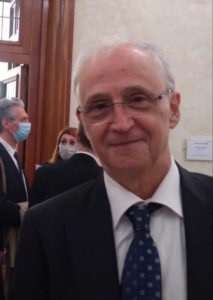
Maurizio Tarsetti
Maurizio Tarsetti studied piano and orchestral conducting at the Rossini Conservatoire in Pesaro. He was the top piano graduate in Italy in 1978 at the “Petrini Zamboni” Competition in Cesena and received awards in national competitions (“A. Speranza” in Taranto, “N. Coco” in Acireale, “F. Liszt” in Lucca) as well as international ones (“Città di Senigallia,” “Bardolino” in Bardolino, “I.P.R.C” in Austin, Texas, USA). Shortly after graduating, he won a scholarship offered by the Polish government to further his studies in Warsaw. He performed as a soloist in major Italian cities and abroad, often with leading orchestras, and his performances were broadcast on radio and television.
He taught piano at the Pesaro Conservatoire and in 2008 was elected director by the faculty, a position reconfirmed three years later.
His tenure coincided with the transition from the old to the new system, which established the Conservatoire as a fully university-level institution (a rule later partially amended). During this period, he established the first agreements between the Conservatoire and prominent musical institutions in the Marche region and promoted the creation of the first two Musical Lyceums in the Marche (Pesaro and Ancona), for which the Conservatoire served as guarantor. Special attention was given to student training through musical initiatives that provided direct contact with the public. In his final year as director, the Conservatoire staged Brecht and Weill’s The Threepenny Opera, Verdi’s Falstaff in collaboration with the Conservatoires of Cesena and Ferrara (with nearly all roles performed by students in nine performances), and Orff’s Carmina Burana (three performances).
In 2013, the Minister of Universities appointed him as a ministerial commissioner, beginning this role at the Istituto Musicale Pareggiato in Ancona. In 2011, he received the “Franco Enriquez” award for organizing a concert uniting Palestinian, Israeli, and Italian students and for supporting the reintegration of former students recovering from substance abuse. Upon his retirement in 2020, he was awarded the “Marchigiano of the Year” prize for “his distinguished career and for supporting cultural and social projects.” The award ceremony, delayed by COVID-19, took place in October 2021 in Rome at the Sala Capitolare of the Senate Library.
Maurizio Tarsetti
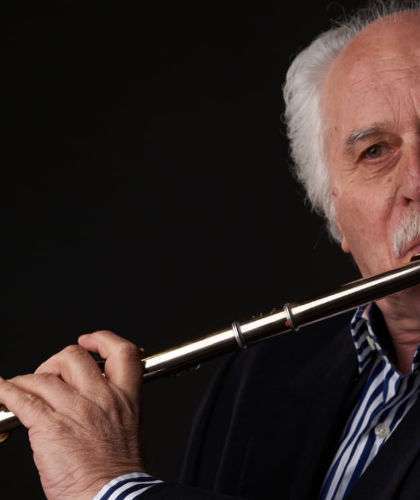
Albino Mattei
He completed his flute studies at the Rossini Conservatoire in Pesaro under G. Graverini and D. Ciliberti, attended masterclasses with M. Larrieu and A. Nicolet, and further refined his training with G. Gatti and C. Klemm, with whom he began studying the Alexander Technique, later continuing with F. Robinson.
He studied under S. Gazzelloni at the advanced courses of the Accademia Chigiana in Siena, earning a merit scholarship and performing at the prestigious music festival “Le Settimane Senesi.” As an orchestral musician, he has performed under the direction of Maag, Muller, Molinari-Pradelli, R. Abbado, Zedda, Rescigno, De Mori, and others. His concert activity ranges from chamber ensembles, from duos to wind quintets, to solo performances with string orchestras. He has performed in Italy, Germany, Russia, Pakistan, Turkey, the Scandinavian countries, former Yugoslavia, and the USA, including venues such as Carnegie Hall and Lincoln Center. He is the Lead Flute of the Italian flute quartet “Les Flutes Joyeuses,” founded in 1986 and still active, with which he maintains an intense national and international concert schedule. Over 100 contemporary works by composers of various nationalities have been dedicated to the quartet.
He has recorded for RAI, Vatican Radio, Ukrainian Radio, and the US stations W.N.Y.C. and W.Q.X.R., and has released recordings for Iktius, Baby Records, Primrose Music, Domani Musica, and Inedita. He has also participated in broadcasts on Rai 1 and Rai Radio 3, including “La Stanza della Musica.”
Contemporary works by Italian and foreign composers have been dedicated to him, and he is featured with a performance of Gasperini in volume V of the Enciclopedia Italiana dei Compositori Contemporanei (Pagano edition).
He has served on juries for national competitions, taught masterclasses at the University of Music in Vienna, the Superior Conservatoire of Music “M. Castillo” in Seville, the Superior Conservatoire of Music in Vigo, and led advanced courses in Italy. He has been a flute professor at the Rossini Conservatoire in Pesaro since 1977, a member of the academic council, and vice-director; in 2013 he held the position of director.
Albino Mattei
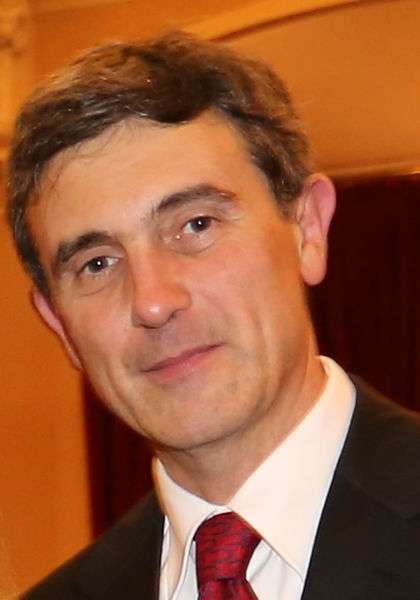
Ludovico Bramanti
Born in Florence in 1959, he completed studies in the humanities and music, graduating with honours in piano at the Conservatoire of Ferrara and earning a degree in literature, with honours, from the University of Pisa, with a thesis in music history. He subsequently continued his piano studies with Michele Marvulli, Paolo Bordoni, and Jörg Demus. He also earned a master’s degree in “Music Production and Promotion” at the University of Florence and a diploma in music education at the Conservatoire of Pescara.
He has performed as a soloist and chamber musician in Italy and abroad and has been active in musical organization. He has served on juries for national and international competitions.
From 1989 to 1991, he directed the B. Gigli state-recognized Music Institute in Recanati.
From 1995 to 2014, he worked at the Rossini Opera Festival in Pesaro in various roles, from collaborative maestro to artistic coordinator. In this position, he managed institutional relations, liaised with orchestras, theatres, and record labels, oversaw general organizational coordination, artistic programming, and the design and coordination of training courses for theatre technicians.
In 1998, he collaborated with Alberto Zedda in establishing and organizing a Baroque music festival in Fano, called “A vagheggiar Orfeo.”
He has taught at many Italian Conservatoires (Fermo, Parma, Piacenza, Foggia, Vibo Valentia, Matera, Bolzano, Genoa, Reggio Calabria, Rovigo), covering various subjects (piano, music history, chamber music, piano accompaniment). Previously, he held a chair in piano practice and vocal score reading for the music education course at the Conservatoire of Genoa and, after winning a competitive examination, a chair in music history. Since 2007, he has held a piano chair at the Rossini Conservatoire in Pesaro, which he directed for two three-year terms from 2014 to 2020.
From 2016 to 2020, he served on the board of the Rossini Opera Festival and from 2016 to 2019 on the board of the Rossini Foundation.
In 2017, he was appointed honorary professor at the China Conservatoire in Beijing.
From 2021 to 2024, he directed the G. Lettimi state-recognized Music Institute in Rimini, leading it first to nationalization in 2023 and then, in 2024—the first case in Italy—to a merger with the Cesena institute, resulting in the new unified Maderna-Lettimi Conservatoire of Cesena-Rimini.
Ludovico Bramanti
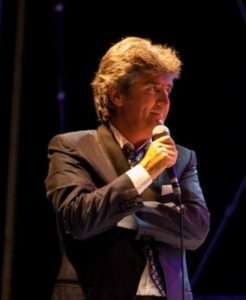
Fabio Masini
After earning diplomas in saxophone, composition, instrumentation and composition for wind band, choral music, and choir conducting under the guidance of Costante Fantini, Callisto Giacomini, and Ivan Vandòr, he furthered his composition studies at the Scuola di Musica di Fiesole with Giacomo Manzoni.
Since 1991, he has taught composition elements for the music education course at the Rossini Conservatoire in Pesaro, while working as a composer, author, conductor of his own productions, and promoter of cultural events. Alongside numerous theatrical works—L’ultima prova (1985), La Fabula di Narciso (1995), Ai Naviganti (1998), Nel Blu (2000), El Matador (2005)—he has pursued an active career in chamber music, performed in Italy and abroad (Germany, France, Finland, Hungary, Lebanon, etc.) with prominent Italian musicians and ensembles including the Italian Saxophone Quartet directed by Federico Mondelci, clarinetist Guido Arbonelli, saxophonist Mario Marzi, and the Gragnani Sextet. He has also set poetry to music, including verses by Montale, Cardarelli, and contemporary authors such as Gianni D’Elia and Carlo Pagnini.
In 2011, he began writing Kirkos Opera, an open composition in continuous evolution, performed at the Fu.Mo (Futurism) festival, July 27–29, 2012, and restaged on August 15, 2013, in Piazzale Roma, Riccione, with an orchestra of 50 musicians, singers, dancers, and circus artists before more than 9,000 spectators. It was performed again on December 19, 2013, at the Rossini Conservatoire in Pesaro and later at the Rimini Civic Museum. Kirkos was praised by Francesca Fabbri Fellini (Federico Fellini’s niece) for its literary and musical quality and became a subject of study in the volume Musicalità e pratiche inclusive edited by Elena Malaguti (Erikson, 2017).
In 2016, he composed Sa un fil de luc for voice, choir, and orchestra on dialect poetry by Carlo Pagnini. In 2017–2018, he worked on Santo Amato – il pellegrino delle stelle, an opera for singers, choir, actors, extras, and orchestra, with text by poet Silvia Bernardi. On February 28, 2024, for the opening of the academic year at the Rossini Conservatoire, at the Teatro Sperimentale in Pesaro, he co-created with composer Michele Mangani the musical divertissement Mi lagnerò tacendo for solo voice, three choristers, and orchestra, performed by the artist Elio with the Conservatoire Orchestra conducted by Luca Ferrara.
Several of his compositions have been recorded by the Roman label Penthaphon, while his didactic works have been published by Progetti Sonori.
After serving as vice director from 2018 to 2020, on September 7, 2020, he was elected director for the 2020–2023 term and was re-elected in June 2023 for a second term from 2024 to 2026.
Fabio Masini
Palazzo Olivieri, the seat of the Conservatory, was built in 1749 based on a design by the Pesaro-born architect and painter Giannandrea Lazzarini (1710–1801), and commissioned by the intellectual Annibale Olivieri, who intended it to house the Library and the Museums he had founded and donated to the city. In the early 1880s, following the decision to establish the Rossini Musical Lyceum within the building, the palace underwent renovation in order to accommodate its new functions.
Complementing the structure, in 1892 the construction of an imposing concert hall — the Pedrotti Hall — was completed on the available area to the right of the palace. As a result, the eighteenth-century façade required a significant extension, including the creation of a second entrance (identical and symmetrical to the original one designed by Lazzarini) and a central stone balcony. In the first inner courtyard stands a monumental bronze statue of Rossini by Carlo Marochetti.
Inside the palace, two important rooms — the Gallery of Distinguished Men and Women of Pesaro (1763) and the Hall of Marbles (1772), which contains a cycle of frescoes depicting the foundation of the city of Pesaro in both its pagan and Christian phases — were frescoed by Lazzarini himself and by his pupils. The room known as the Rossini Temple, whose ceiling is decorated with Pompeian motifs typical of the Neoclassical style, houses precious memorabilia, letters, and musical autographs by Gioachino Rossini.
The Rossini Conservatory welcomes visits by school groups (from educational institutions of all levels) and organized visitor groups, upon submission of a request to be sent to the Conservatory’s Administrative Offices.